
Motorhead Articles
Get Your Marketing in Gear
Can I Grow My Auto Restoration Shop Using Social Media Alone?
Updated Oct 06, 2021
When choosing how to represent your business online, you’re going to be faced with a lot of choices. One of the first questions you’ll need to answer is: ‘do I need a website or will I just use social media to promote myself?’
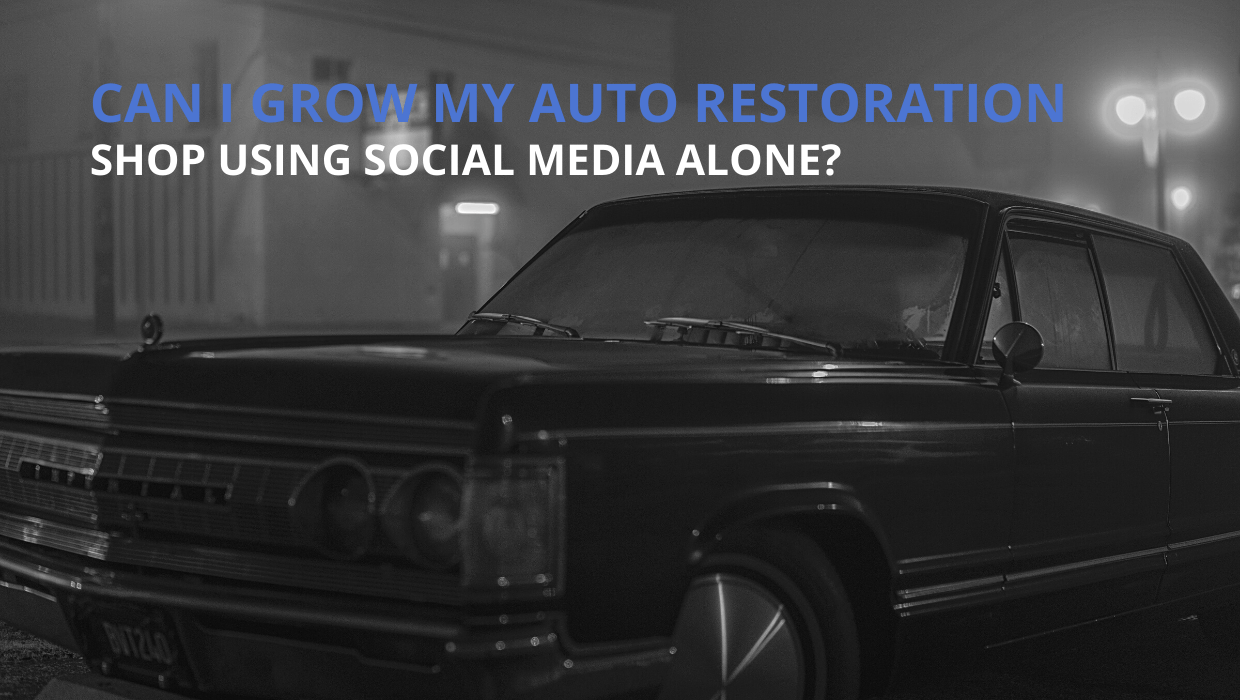
The internet is full of opportunities for ambitious shop owners - and full of places customers can solve all of their auto restoration needs.
People can get everything they could ever want online. You can buy products, book in for services, check out videos of product reviews, and you can even get virtual tours of events. With all of this easily available on the internet, and consumers now expecting it, it’s become a necessity that all businesses are online.
When choosing how to represent your business online, you’re going to be faced with a lot of choices. One of the first questions you’ll need to answer is: ‘do I need a website or will I just use social media to promote myself?’
Both options have their advantages and disadvantages, but ultimately, a combination of both will get you better results.
Many small business owners believe they can grow their business by using social media alone. 20% of small business owners use social media instead of owning a website.
Today, we’re going to look at the pros and cons of websites and social media to help you decide what’s best for your business.
Can you rely on social media alone to help grow your shop?
Whether your auto restoration or performance shop has been around for a while, or you’re just starting off, having a social media account is a necessary step in growing your business.
But can you use social media exclusively to grow your shop’s business?
Let’s take a look at all the advantages and disadvantages of social media to find out whether it's a reliable method of attracting and converting prospects into paying clients.
The advantages of having social media profiles
1. Improved brand awareness
By interacting with your audience over social media you’ll be able to increase your brand awareness in the industry. This means that your potential clients will trust you more and be more likely to work with you over your competitors.
89% of consumers have said that they buy from brands they follow on social media - so be sure to post relevant content and engage with them regularly.
2. There’s no contracts
When you create a social media account there’s no long-term commitment. If you don’t like the way a social media platform works then you can easily delete your account and move to another one.
3. It’s free & easy to set up
One of the great things about social media is it doesn’t cost you a dime, unless you pay for advertising. It’s also incredibly easy to set up and use so you can have a working social media profile for your shop in a matter of minutes!
4. Improved customer engagement
By creating and optimizing social media profiles, you could get the attention of quite a lot of people in your target audience. Social media platforms are used by nearly half the population, 3.81 billion people worldwide to be exact.
By being active on social media you’ll be able to chat with your potential clients and build up a relationship.
This real-time customer interaction will help them learn more about your business. It’ll also get you top of their list when they need an auto performance and restoration job done.
The disadvantages of having social media profiles
1. You can’t really customize your profile
You can change your profile picture, upload a new banner, and edit your information but apart from this, there is very little customization available on social media platforms.
What this means for you is your profile looks pretty much the same as everybody else’s.
There’s little space to show off your true individuality - which puts you at risk of being seen as a commodity. If your audience views your services in the same light as your competitors, you’re just going to be battling over price to win their custom.
2. You don’t have control
Unfortunately, you don’t technically own your social media account. It’s owned by a third-party and if something was to go wrong with your account, you could potentially lose your whole business in an instant.
Social media also controls what types of ads and promotions appear on your profile page - which means there’s always the possibility your competitors could end up advertising on your profile.
It’s also important to remember that the social media platform you’re using today might not be around forever. Bebo and Myspace were once considered irreplaceable social media platforms until Facebook took over. It’s quite possible that another social media tycoon could take over again and Facebook and Instagram will be a distant memory.
UPDATE: On October 4th, 2021 all of the platforms owned by Facebook, including Instagram and WhatsApp, were gone in minutes and out for hours. On this day, they were down across the globe for over 7 hours. This was a stark reminder that we have zero control over these platforms and should not count on them as our sole means of promoting our brand, products, and services. This also affected Facebook messenger, so if you use Messenger to communicate with your clients and prospects, it may have been a tough day.
Along with what happened on the 4th, we've heard of Facebook just taking down or banning a business page without so much as an explanation other than to say that the page did not conform with community standards. Has this happened to you?
Yes, websites go down as well, but in most cases, if you have contracted with a quality agency that uses a solid platform, outages aren't usually very long, as they have a back up plan. And if they've done their job, they also have a backup of your site for the worst-case scenario where you need to move your site to another hosting provider. In the case of social media platforms like Facebook, that option does not exist because, unlike your site, you don't have control of what you've posted on those platforms.
October 4th, 2021 was an eye-opener for those that depended 100% on Facebook as the lifeblood of their business. Don't get caught with your pants down. If you don't have a quality website for your business, it's time to think about this differently and make sure you own and have control of your content and how you communicate with your clients and prospects.
3. Social media doesn’t guarantee conversions
You’d think with 3.81 billion people on social media all over the world you’d get a good few conversions from your account - but unfortunately it doesn’t really work that way.
Even if you have thousands of people following you online this doesn’t mean they’re going to convert. 46% of people who follow brands on Facebook followed with no intention of making a purchase. They simply wanted a freebie, entry into a competition, or they were recommended by a friend.
Social media really doesn’t help you get that many conversions (i.e. sales and bookings) but what you could do is funnel your social media followers to your website where you can entice them to convert.
Now, let's take a look at the advantages and disadvantages of owning a website in comparison.
Do auto restoration shops need websites?
Having control over what your online presence looks like is an important part of showing your audience what your business is all about.
The advantages of having a website
1. It’s available 24/7
Your website is your 24/7 sales rep. They’re available around the clock to make sure your potential clients get the necessary information they need before working with you.
2. You own it
One of the best things about having a website is that you own it. It is 100% yours and no third-party person can take it away from you. You get to decide what it looks like, what’s displayed on it, and what features are available. You can make your website as unique as you want to show your audience that you’re the only shop to work with.
3. Websites improve credibility
Having a website doesn’t just look good, it also improves credibility and trust with your potential clients. 75% of consumers make assumptions about a company’s credibility based on their website so make sure your website works properly and looks good.
4. Improved marketing
Having a website means that you can easily improve your digital marketing strategy.
You’ll be able to communicate with your audience and provide them with incentives to convert. You can build landing pages to encourage potential clients to join mailing lists.
You can also use blogs, videos, images, and customer reviews to market your business.
The disadvantages of owning a website
1. Websites need to be maintained
If you want to run a website then you’re going to need to keep it maintained. Keeping a website updated is important for security reasons and it makes you look better.
It can be quite time-consuming if you do it yourself, but if you want to keep your information secure and your customers happy, then you must update and maintain your site.
2. Websites cost money
A custom website can cost anywhere between $5000 - $25,000+, depending on what features you want.
It’s true you can get free website builders, but these websites usually look poor and aren’t very appealing to potential clients.
3. You have to work hard to get traffic to your site
Just having a website isn’t enough to attract people to your business. You’ll have to put time and effort into improving your SEO, writing blog posts, and advertising your website.
With that, you have a brief overview of the pros and cons of relying on social media or a website for promoting your shop online.
The best digital marketing campaign incorporates both a strong social media presence and a fully-optimized website.
Here at Motorhead Digital, we specialize in helping auto performance and restoration shops succeed online through a combination of website design, SEO services, and online awareness campaigns.
If you’d like to talk about how to improve your business and develop a kickass digital marketing strategy then
get in touch with our team today.