
Motorhead Articles
Get Your Marketing in Gear
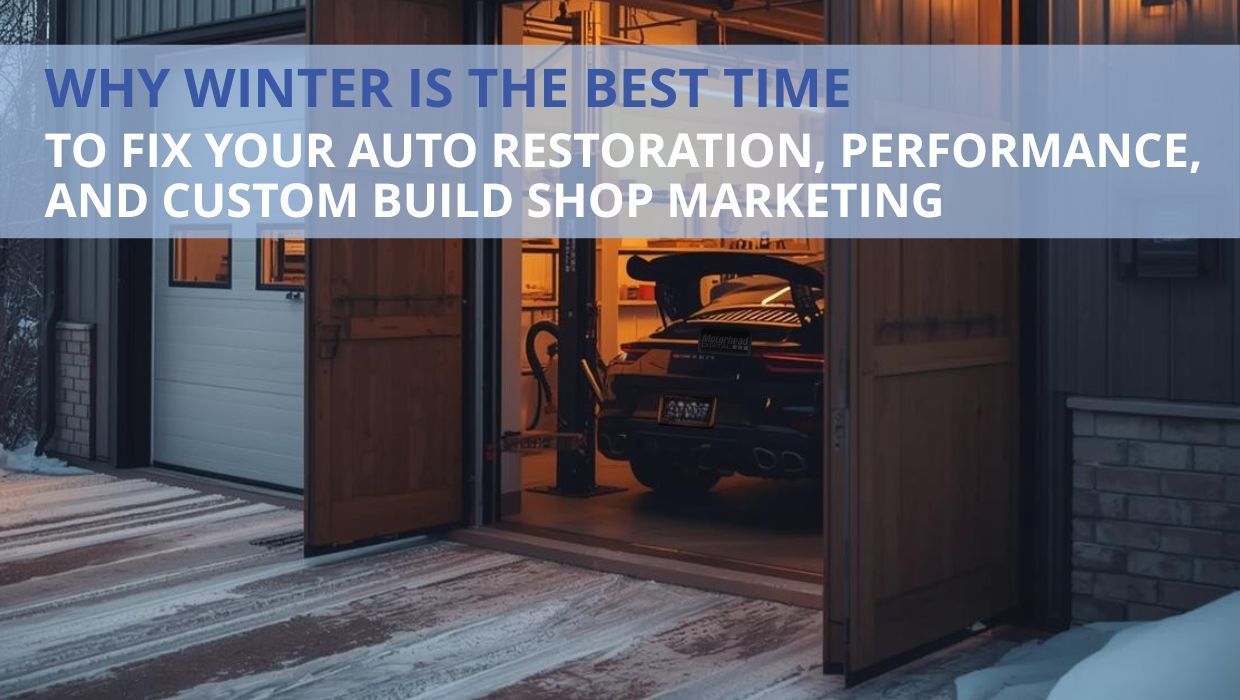
Why Winter Is the Best Time to Fix Your Auto Restoration, Performance, and Custom Build Shop Marketing
Using Downtime to Build Systems That Pay Off All Year
Winter Reveals What's Broken
For many auto restoration, performance, and custom build shop owners, winter carries a familiar reputation. Fewer calls. Slower foot traffic. Projects moving at a crawl. It's easy to label winter as "downtime" and wait for spring to bring momentum back.
But here's the truth most shop owners miss: winter is the best time of year to fix your marketing.
While competitors hibernate, the shops that use winter wisely quietly build the systems that fuel their busiest seasons. The body content of your post goes here. To edit this text, click on it and delete this default text and start typing your own or paste your own from a different source.
When business slows down, the cracks show. Missed calls feel louder. Leads that don't follow up stand out. A website that looks outdated suddenly feels expensive.
In peak season, volume hides inefficiency. In winter, inefficiency is impossible to ignore. That's a gift.
Winter gives you clarity. You can finally see where leads are falling through the cracks, where customers are getting lost, and where your marketing stops working without constant effort.
The Three Critical Areas Where Shops Lose Leads
When you audit your marketing during winter, you'll typically find problems in three key areas:
- Visibility Problems – You're not showing up when customers search for shops like yours. Your Google Business Profile is incomplete or inconsistent. Your local SEO is non-existent. Potential customers can't find you organically, so they're finding your competitors instead.
- Credibility Problems – Your website looks like it was built in 2010. Your social media is sporadic or silent. There's nothing showcasing your best builds or establishing you as the authority in your niche. High-value customers scroll past because you don't look like a shop that handles premium projects.
- Conversion Problems – Traffic arrives at your website, but visitors don't take action. Forms don't get filled out. Calls don't come through. You have no follow-up system for the leads who do reach out. There's no email list to nurture prospects over time.
Winter is when you finally have the bandwidth to fix all three.
You Have Time to Fix It Properly
During busy months, marketing often becomes reactive. A post here. A boosted ad there. A reply when you remember. Winter creates something rare for shop owners: space to think strategically. This is when you can build the foundational systems that turn your online presence into a lead-generating machine.
What Strategic Winter Marketing Looks Like
Get Your Visibility Right
Most auto shops rely on word-of-mouth and referrals. That's great until it's not. Winter is the perfect time to go beyond referrals and make sure you show up when customers are actively searching.
A proper local and organic SEO strategy ensures you rank higher in search results, show up consistently across platforms, and get found by customers who don't already know you exist. This includes optimizing your Google Business Profile, cleaning up your online listings, and building the kind of digital footprint that makes Google (and customers) trust you.
The shops that dominate search results in their market didn't get there by accident. They got there by treating SEO as a system, not a one-time task.
Upgrade Your Website So It Actually Converts
Your website isn't a digital brochure. It's your hardest-working salesperson.
But most shop websites fail at the basics. They're slow. They're not mobile-friendly. They bury contact information. They don't showcase the work that makes customers say "I want that."
A professionally designed, search engine-friendly website does more than look good. It builds trust, tells your story, helps potential customers visualize their dream build becoming reality, and converts visitors into leads who actually pick up the phone.
And here's something most shops miss: the way people search is changing. With AI-powered search and voice assistants becoming the norm, your website content needs to answer questions the way real people ask them. That means going beyond traditional SEO keywords and creating content optimized for Answer Engine Optimization (AEO). Instead of just targeting "custom Mustang builds," your content should answer "How long does a full Mustang restoration take?" or "What's involved in a restomod project?"
This kind of conversational, question-based content doesn't just help you show up in AI search results. It positions you as the expert who actually answers what customers want to know. Winter gives you the time to build or refresh your site properly. Not a rushed job. Not a generic template. A site that works on all devices, loads fast, and turns browsers into buyers.
Build Authority Through Consistent Content
Customers choosing high-ticket builds don't decide overnight. They watch. They research. They follow shops for months before they ever reach out.
Winter is when you can build that authority with strategic content. Behind-the-scenes shop tours. Build breakdowns. Educational posts about your process. The kind of content that positions you as the expert, not just another shop.
And with AI search tools now pulling answers from websites to answer customer questions, your content strategy matters more than ever. If your site answers "What's the difference between a restoration and a restomod?" or "How much does a full custom paint job cost?"—AI search engines can surface your shop as the answer. That's free visibility you can't get any other way.
When you combine website content, blog articles, and social media into one cohesive strategy, you create multiple touchpoints that keep you top-of-mind. While other shops go silent, you're educating, inspiring, and building trust.
Content compounds. The effort you put in during winter keeps working for months (and years) to come.
Set Up Email Marketing That Actually Works
Here's a sobering truth: you don't own your social media audience. Algorithms change. Platforms fade. Your Facebook followers aren't really yours.
But an email list? That's an asset you control.
Winter is the ideal time to build email marketing systems that deliver high-converting messages directly to inboxes. Automated welcome sequences for new leads. Monthly newsletters that showcase recent builds. Targeted campaigns for parts and accessory sales.
Email keeps you top-of-mind with past customers and warms up future ones. And unlike social media, it doesn't disappear when Meta changes its algorithm.
Get Your Social Media House in Order
Speaking of social media, winter is when you finally have time to fix what gets neglected when you're slammed with projects.
Most shops know they should be posting consistently. But when you're buried in builds, social media is the first thing that falls off the radar. A post goes up when you remember. Months go by with nothing. Your Instagram looks abandoned while competitors are staying visible.
The reality? Inconsistent social media tells customers you're inconsistent in general. And high-value clients notice.
Winter gives you the breathing room to:
- Clean up outdated profile information across all platforms
- Archive old, irrelevant posts that don't represent your current work
- Create a content calendar so you're not scrambling for posts during busy season
- Batch-create content you can schedule months in advance
- Set up systems that keep you posting even when the shop is packed
Here's the thing: you don't need to post every day. You need to post consistently. A solid plan built in winter means your social presence doesn't disappear the minute spring hits and your schedule fills up.
And when you stay consistent while competitors go dark, customers remember who was there when they were researching their next build.
Optimize Your Entire Digital Footprint
Your digital presence isn't just your website. It's everywhere customers might encounter you online: Google, Facebook, Instagram, YouTube, review sites, and industry directories.
Most shops have a scattered, inconsistent presence. Different business hours listed in different places. Outdated photos. Incomplete profiles.
Digital footprint optimization means cleaning up every corner of your online presence so that no matter where a customer finds you, they see the same professional, trustworthy shop. This clarity makes customers more confident in choosing you over competitors.

Winter Marketing Is Cheaper and More Effective
Most shops reduce or pause marketing spend during winter. That means:
- Less competition for attention
- Lower ad costs
- More visibility for shops that stay active
While others go quiet, your content, website, and Google presence have more room to breathe. The leads you generate now are often higher quality because they're planning ahead, not shopping impulsively.
Those new customers that show up in the spring when they start thinking about getting work done don't appear out of nowhere. They start researching months earlier.
If you wait until spring to market, you're already late.
The shops winning those high-value spring projects? They earned that business during the winter months when they stayed visible, stayed active, and stayed positioned as the authority.
- Check out our article that discusses why stopping your marketing can affect your business for years to come.
Systems Built in Winter Pay Off All Year
The best winter marketing work isn't flashy. It's foundational.
This is the season to build:
- A new or refreshed website that showcases your best work
- Local SEO that gets you ranking in your market
- Social media systems that keep you consistent without burning you out
- Email sequences that nurture leads over time
- Review request automation that protects your reputation
- Content calendars that make posting easier, not exhausting
These systems don't just help in winter. They run quietly in the background during your busiest months when you have zero time to think about marketing.
Spring and summer success is usually decided in winter.
The Power of a Complete Marketing System
Here's what separates shops that stay busy from shops that struggle:
Done-with-you marketing systems.
Most shop owners know they need better marketing. But they don't have the time, expertise, or team to execute properly. They try to DIY their way through SEO, social media, and website updates while running a business. The result? Nothing gets finished. Nothing gets optimized. And the marketing stays broken.
The solution is a proven system that combines visibility, credibility, and conversion into one cohesive strategy. A system where:
- Your SEO, AEO, and Google presence get you found
- Your website and content establish your authority
- Your email marketing and social media keep you top-of-mind
- Your conversion systems turn traffic into leads and leads into customers
When these pieces work together, your marketing becomes a true growth engine instead of a constant source of stress.
Winter is when you have the clarity and capacity to build (or fix) that system properly.
Winter Is When Authority Is Built
Customers choosing high-ticket builds don't decide overnight. They watch. They research. They follow shops long before they reach out.
Winter is when you can:
- Share behind-the-scenes content that humanizes your shop
- Tell your brand story and showcase your awards
- Educate customers on your process and expertise
- Position yourself as the trusted expert in your niche
- Stay consistent on social media when competitors ghost their audience
Authority compounds. The shops that feel "suddenly busy" in spring are often the ones who stayed visible all winter.
They weren't lucky. They were strategic.
The Shops That Win Don't Wait
The most successful auto shops don't treat winter as a pause. They treat it as preparation.
They use slower months to:
- Fix what's broken in their visibility, credibility, and conversion
- Build what's missing in their marketing infrastructure
- Strengthen what's working so it scales during busy season
By the time spring hits, their phones are ringing, their systems are running, and their marketing isn't scrambling to catch up.
The Winter Marketing Checklist
If you want to use this winter strategically, here's what to prioritize:
Week 1-2: Audit & Diagnose
- Analyze where you're losing leads
- Review your Google presence and rankings
- Assess your website's conversion rate
- Identify gaps in your content and social media
Week 3-6: Fix Your Foundation
- Optimize your Google Business Profile and local SEO
- Update or rebuild your website if needed
- Clean up your digital footprint across all platforms
- Set up review request systems
Week 7-10: Build Your Content Engine
- Create a content calendar for social media
- Write blog articles that showcase expertise
- Film behind-the-scenes and educational videos
- Build email sequences for lead nurture
Week 11-14: Turn On Lead Generation
- Launch (or optimize) paid search campaigns
- Activate email marketing to your list
- Ensure all conversion points are working
- Set up tracking to measure results
The shops that execute this plan don't just survive winter. They dominate the entire year that follows.
If Your Shop Slows Down in Winter, That's Not a Failure
It's an opportunity. Winter is the season where smart marketing decisions are made quietly, and the payoff shows up loudly later. While your competitors are waiting for spring to "turn things back on," you can be building the systems that ensure you never have to wait for business to find you again.
- You can establish the visibility that gets you found.
- You can create the credibility that wins high-value projects.
- You can build the conversion systems that turn traffic into revenue.
- And when spring arrives, you won't be scrambling to catch up.
- You'll already be booked.
Ready to make this your best marketing winter yet?
The shops that win don't wait for busy season to fix their marketing. They use winter to build the systems that fuel year-round growth.
At Motorhead Digital, we understand how to position your shop so the right people notice - whether they are paying clients or future employees. If you run an aftermarket restoration, performance, race, or restyling shop, we can help you create a marketing strategy that does the heavy lifting.
Give us a call at (585) 766-9785, email us at
maximizesales@motorheaddigital.com, or visit
MotorheadDigital.comto start a conversation.