
Motorhead Articles
Get Your Marketing in Gear
Trust, Loyalty & Relationships: The Real Shop Advantage
The Real Horsepower Behind Successful Shops
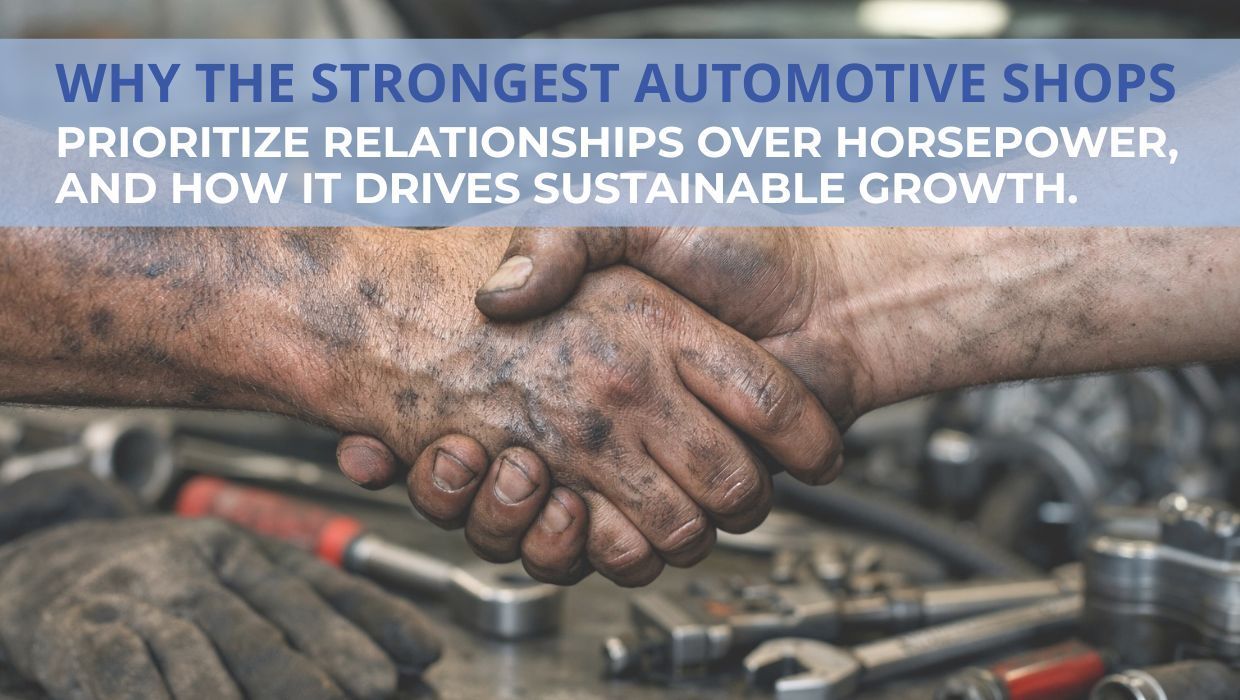
Trust, Loyalty & Relationships: The Real Horsepower Behind Successful Automotive Shops
Shop Culture · Client Relationships · Digital Strategy
In the automotive aftermarket, trust isn't a buzzword. It's currency. Shops don't grow on horsepower alone; they grow on relationships. On loyalty earned over time. On the quiet confidence that when someone hands you their keys, you'll treat that vehicle with the same respect they do.
This industry is built on reputation. Always has been. Most shop restoration, performance, and custom build shop owners didn't get into this to run marketing campaigns or chase algorithms. They got into it because they love machines, craftsmanship, problem-solving, and the culture that surrounds them. But as the aftermarket has evolved, so has the way trust is built, tested, and sometimes lost.
This isn't a post about selling you something. It's about naming what already matters, and showing how trust, loyalty, and relationships quietly shape the shops that last.
Trust Starts Long Before the First Job
For most customers, trust begins before they ever set foot inside your shop. They check your website. They read your reviews. They scroll your social media. They're looking for signs that real people stand behind the work. A polished brand with no personality feels distant. A slightly rough brand with genuine honesty feels real.
In a world where anyone can claim to be "the best," trust is built by showing your process, not just your results.
Customers want to know: How do you communicate? Do you explain things clearly? Do you show your work, even when it's mid-build and messy? Do you stand behind your timelines and your pricing? Transparency doesn't mean over-sharing. It means being clear, predictable, and human. When customers know what to expect, anxiety drops. When anxiety drops, trust grows.
What Should Be on Your Shop's Website to Build Trust?
We constantly audit shop websites at Motorhead Digital, and the gap between what most shops have on their sites and what actually converts a skeptical visitor into a paying customer is significant. Your website isn't a brochure; it's your first sales conversation. Here's what it needs to do its job.
Above the Fold: The Confidence Zone
The moment someone lands on your homepage, they're asking one question: Can I trust these guys? Answer it immediately. Your header area should include your shop name and location, a one-line statement of what you do and who you do it for, a primary phone number, and at least one visible trust signal — star rating, years in business, or a brand/certification logo.
The Elements That Actually Move the Needle
Real team photos and bios — Puts a human face on the shop. Customers trust people, not logos. Stock photos or a missing team page are a red flag.
Service pages with honest pricing ranges — Reduce friction and pre-qualify leads. "Call for pricing" with zero guidance signals secrecy, not premium positioning. Even a range ("Turbo builds typically start at $X") builds far more confidence than nothing.
Before-and-after build gallery — Proof over promises. Show the craftsmanship and the range of what you do. Outdated photos or generic stock images of cars you didn't build undercut everything else on the page.
Verified review embeds (Google or Yelp) — Third-party validation you can't manufacture. Customers trust other customers. Hand-picked testimonials with no verification carry a fraction of the weight of a live Google rating.
A genuine FAQ page — Answers unspoken objections before someone has to pick up the phone. It reduces basic inquiry calls and signals transparency. A generic FAQ copy-pasted from another shop does the opposite.
Physical address and an embedded map — Legitimizes the business. Many customers, especially on high-dollar builds, want to know they're dealing with a real brick-and-mortar shop before they commit.
Clear contact info with a stated response time — Reduces anxiety about whether you'll actually respond. A contact form with no phone number and no expectation-setting is a conversion killer.
Brand affiliations and certifications — Association with trusted names (SEMA, ASE, manufacturer certifications, recognized brands you carry) adds instant credibility. Display the logos and link to them.
SEO and AEO: Getting Found and Getting Chosen
Beyond the visual trust signals, your website needs to be structured so search engines — and increasingly, AI answer engines — can understand and search your content. That means writing dedicated service pages for each major offering (not cramming everything onto one page), adding a proper FAQ section, using your city and region naturally throughout your copy, and ensuring your Google Business Profile is fully filled out and connected to your site. When Google or an AI assistant answers "best performance shop near me," your website's structure determines whether you show up—or your competitor does.
Loyalty Is Earned in the In-Between Moments
Loyalty isn't built on one flawless job. It's built on how you handle everything around the job. Delays happen. Parts go on backorder. Builds take longer than expected. Mistakes happen. Customers don't leave because of problems — they leave because of silence, defensiveness, or a feeling of being dismissed.
The shops that earn long-term loyalty tend to do a few things exceptionally well: they communicate early, even when the news isn't good. They explain the why, not just the what. They take ownership when something goes sideways instead of deflecting. And they respect the customer's financial and emotional investment.
Vehicles aren't just machines. They're memories, identities, weekend therapy, family heirlooms, and personal milestones. When a customer trusts you with that, they're trusting you with more than metal. Loyalty grows when customers feel understood.
Relationships Are the Long Game
The strongest shops don't think transactionally. They think relationally. That mindset shows up everywhere — in how they talk to first-time customers, in how they follow up after a job is complete, in how they support returning customers years later, in how they treat their vendors, their partners, and their own team.
Relationships compound. A customer who genuinely trusts you doesn't just come back — they refer friends. They defend your reputation online. They give you grace when things don't go perfectly. That kind of loyalty can't be bought with a coupon or faked with a slick ad campaign. It's built through consistency, integrity, and shared respect over time.
Digital Trust Is Still Real Trust
Some shop owners feel disconnected from digital marketing because it feels impersonal or artificial. We get it. But digital trust works exactly the same way real-world trust does — it's just happening earlier in the relationship.
Your online presence is answering unspoken questions right now: Are you active or abandoned? Do you care about quality? Do you respect your craft? Do you respect your customers? A shop that shows up consistently online feels dependable. A shop that educates rather than constantly promotes feels confident. A shop that highlights its team feels grounded in something real.
Trust isn't about being flashy. It's about being real, reliable, and recognizable.
Trust Inside the Shop Matters Just as Much
Trust isn't only external. Internal trust shapes everything. When team members trust leadership, communication improves. When roles are clear, accountability follows. When expectations are consistent, morale stabilizes — and that stability is felt by every customer who walks through the door.
Shops with high internal trust waste less time fixing preventable problems, retain skilled technicians longer, deliver more consistent customer experiences, and adapt better when things get slow or the industry shifts. Customers can feel when a shop is aligned. They can feel just as clearly when it's not.
Why This Matters More Than Ever
The automotive aftermarket is more competitive than it's ever been. Customers have more choices, more information, and less patience for poor experiences. That's exactly why the shops that invest in relationships will always outlast the ones chasing quick wins. Marketing trends change. Platforms rise and fall. Algorithms shift. But trust, loyalty, and relationships are timeless.
What Strong Relationships Actually Look Like in Practice
You don't need a massive budget to build trust. You need intention. A few deliberate habits go further than most marketing campaigns:
- Follow up after a job is complete, even just a quick check-in text or email
- Share educational content that helps customers understand their vehicles better
- Be direct and honest about timelines and costs
- Show behind-the-scenes moments, not just finished builds
These habits tell customers something that no ad ever could: We care about the work, and we care about you.
Frequently Asked Questions
How do automotive shops build customer trust? Automotive shops build trust by being transparent about timelines and pricing, communicating proactively when problems arise, showing their process (not just polished final results), and maintaining a consistent online presence. Trust usually starts before the first job — customers vet shops through reviews, websites, and social media before ever picking up the phone.
What should an automotive shop have on its website to build trust? A shop's website should include real team photos and bios, a clear explanation of services with honest pricing ranges, verified customer-review embeds, a before-and-after build gallery, a genuine FAQ page, a clearly visible physical address with an embedded map, explicit contact information, and brand affiliations or certifications prominently displayed. Social proof and transparency above the fold are the biggest conversion factors we see at Motorhead Digital.
Why do customers leave automotive shops? Customers leave not because of problems or delays — those are expected in complex builds and repairs. They leave because of silence, defensiveness, or a feeling of being dismissed when things go wrong. Poor communication is the leading driver of customer churn in the automotive aftermarket.
How important is online reputation for auto shops? It's critical. Most customers research a shop online before calling or visiting. A consistent, active, and honest digital presence — including reviews, social media, and a professional website — is the first trust signal a potential customer encounters. For most shops, the website is doing the selling long before a person ever calls.
What is the difference between transactional and relational thinking in a shop? Transactional shops focus on completing jobs and moving on. Relational shops focus on the full customer experience — before, during, and after every job. They follow up, educate, and support customers years after a build, and treat vendors and team members with the same respect they give customers. The result is compounding loyalty: customers who return, refer others, and defend your reputation when it matters.
Closing Thoughts From Inside the Garage
At Motorhead Digital, we work with shops every day that are deeply committed to their craft. The most successful ones, the ones still growing five and ten years in all, share the same foundation, whether they've named it or not.
They value trust over hype. They prioritize relationships over transactions. They understand that loyalty is earned, not assumed. That's the real engine behind sustainable growth in this industry.
And in a world built on passion, precision, and pride, that kind of foundation doesn't just support a business. It carries a legacy.
If you're building for the long haul, you're already on the right road.