Tariffs, Pricing Pressure, and How Auto Shops Can Communicate Value Better
Pricing has always been a delicate conversation in the automotive world. Right now, it is more delicate than ever.
Amid rising tariffs, supply chain disruptions, and rising material costs, and with customers already feeling the pinch at home, auto shops are navigating a challenging environment. The cost to build, restore, repair, or modify a vehicle is climbing, and that puts restoration, custom, and performance shops in a position where how you communicate matters just as much as the quality of your work.
Here is the reality: most customers can accept a higher price when it is explained clearly. What they struggle with is surprise.
Tariffs Are Not Just Someone Else's Problem
When most people hear the word "tariff," they picture large manufacturers or overseas headlines. But in the specialty automotive aftermarket, the effects work their way down to the shop floor faster than most people expect.
SEMA has identified tariffs as a significant X factor that could dramatically increase costs and exert pressure across the automotive aftermarket industry, with the heaviest exposure falling on small and mid-sized parts manufacturers who rely on international supply chains. Steel and aluminum tariffs, parts tariffs, and shifting trade policies have created real pricing volatility that trickles through to vendors, distributors, and ultimately to shops like yours.
SEMA's position reflects an unwavering belief in American manufacturing and ingenuity, their guiding principles call for orderly transitions, government support for reshoring, and protections that prevent domestic suppliers from becoming opportunistic during periods of trade disruption. That matters, because many aftermarket businesses are small domestic companies, builders, fabricators, machinists, and installers - not faceless corporations with unlimited cash reserves.
The specialty automotive aftermarket contributes roughly $337 billion annually to the U.S. economy and supports more than 1.3 million American jobs. The stakes for getting trade policy right are enormous. But while those policy conversations happen in Washington, your shop still needs to open its doors every morning and give customers a reason to trust the number on their estimate.
Read the SEMA article here.
Your Customer Sees the Final Number, Not Everything Behind It
When a customer reviews a quote for a restoration phase, performance package, or fabrication job, they do not see the vendor price increase you absorbed last quarter. They are not seeing the part that used to arrive in five days and now takes three weeks. They are not seeing the stack of small cost adjustments your shop ate before finally having to adjust pricing.
So when someone asks, "Why does it cost that much?" they are not always questioning your integrity. More often than not, they simply do not have the full picture.
That is where shops can do better.
Explain the Situation Before the Customer Has to Ask
The best time to address pricing pressure is before a customer is staring at a number they were not expecting. Build it into your normal consultation process, without turning every estimate into an economics lecture.
Something as simple as:
"Parts pricing has been moving around more than usual, especially on certain imported components and materials. We will always quote as accurately as possible, but we want to be upfront if supplier pricing shifts before parts are ordered," goes a long way. It sets expectations, demonstrates honesty, and positions your shop as a professional guide rather than someone delivering bad news after the fact.
Customers respect straight talk. Especially when money is tight.
Break Down the Estimate: Without Apologizing for It
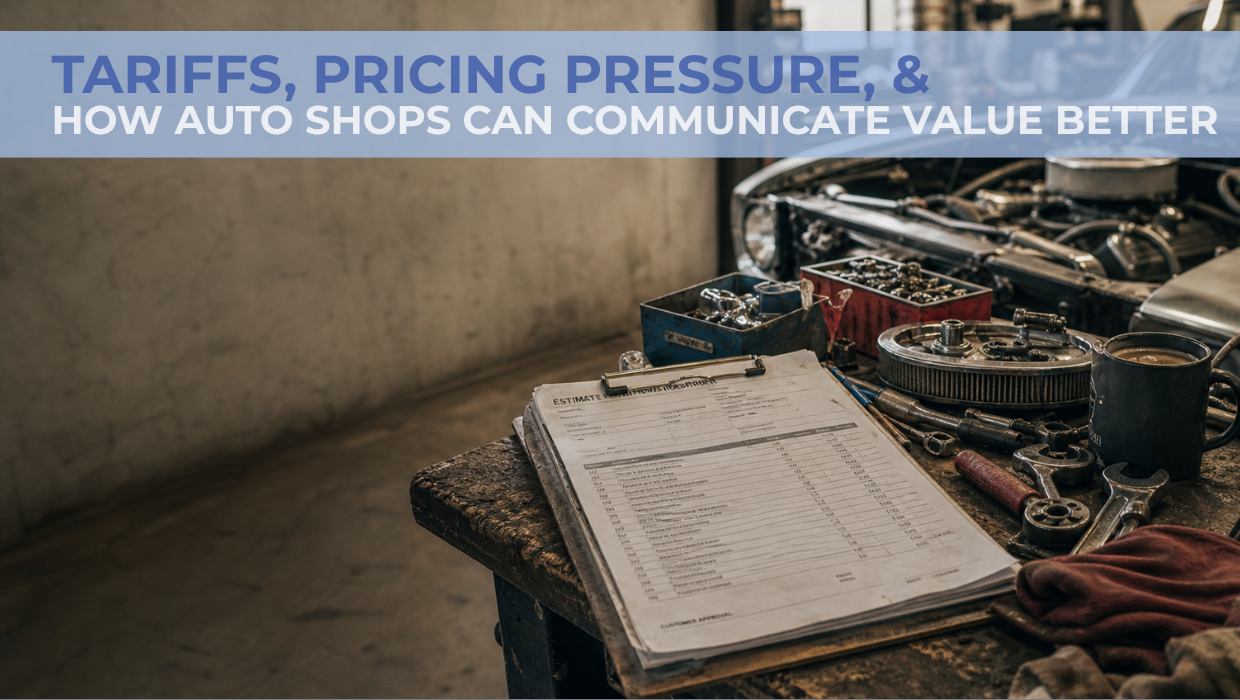
A clear, organized estimate builds trust faster than almost anything else you can do. That does not mean handing over a 14-page spreadsheet, but it does mean helping the customer understand the major categories: parts, labor, materials, freight, outside services, specialty work, and shop supplies.
When everything is buried in one lump number, the customer's imagination fills in the blanks, and usually not in your favor. When the estimate is organized, they can see they are not just paying for "a part" or "some labor." They are paying for skill, sourcing, precision, accountability, and someone who is paying close attention to details they do not know how to check themselves.
A good shop does not need to apologize for charging correctly. You are not selling a commodity.
Stop Selling Price. Start Selling Confidence.
The cheapest shop is rarely the safest choice, and in the custom, restoration, and performance world, one bad shortcut can cost a customer twice as much to fix later. Poor wiring, cheap parts, rushed tuning, bad bodywork- these are not just inconveniences. They are expensive lessons.
Shift the conversation: instead of "we are more expensive because our costs went up," say "we are focused on doing this correctly, using the right parts, and protecting the long-term outcome of your build." That is a different message entirely. It moves the conversation from price to value, and value is what holds up when a customer is comparing shops. The natural bridge when discussing how trust is the real currency in a shifting market. If you're looking for a place to start, we've written more about how shops can build that kind of loyalty over time — check out our blog,
Trust, Loyalty & Relationships: The Real Shop Advantage, for a deeper look.
Use Content to Educate Before They Call
If you are only having the pricing conversation one customer at a time, you are doing extra work. Your website, social media, and email content should be doing some of that work for you.
Simple posts and articles around topics like
what affects the cost of a restoration,
why performance parts prices change, or
what you should know before starting a build do two important things at once. They help customers understand the market, and they position your shop as the trusted voice in a noisy industry.
SEMA has been actively engaging federal policymakers on behalf of aftermarket businesses, sharing real survey data on tariff impacts and establishing guiding principles for international trade discussions, because the landscape continues to change and member businesses need clarity to plan ahead. Your customers need the same thing: clarity. When people feel informed, they move forward. When they feel confused, they hesitate or go somewhere else.
If you're not sure where to start,
our
content strategy guide for auto shops is a good place to begin
Stay Practical — Keep It Out of the Political Weeds
You do not need to take a political position in your marketing. The better move is to keep the message practical and customer-focused.
Something like:
"Some parts and materials are being affected by changing trade policies, supplier costs, and freight increases. We are monitoring pricing closely so we can quote projects as accurately as possible." That is clear, neutral, and useful. It aligns with
SEMA's broader position, which is not "tariffs bad" but rather that aftermarket businesses need fair trade, domestic manufacturing support, and enough policy clarity to make sound long-term decisions.
The message is not panic. It is preparedness.
Value Communication Is Now a Competitive Advantage
A lot of shops are talented. Not all of them communicate well. That gap is your opportunity.
The shop that clearly explains pricing, proactively educates customers, shows what quality looks like, and leads the pricing conversation rather than avoiding it will stand out. Not because it is the cheapest, but because it is the easiest to trust.
In a market where costs are shifting and customers are cautious, trust is currency.
Tariffs, supply chain disruptions, and pricing pressure may be outside your control. But how do you communicate your value? That is entirely up to you. If you're ready to take a hard look at where your shop stands online,
our 2026 marketing checklist walks you through exactly what to tackle first.
If you're ready to shift your shop's website, email marketing, or social media into high gear,
contact Motorhead Digital today. Let's build a strategy that drives real traffic—and real builds—straight to your shop doors.