Motorhead Articles

Get Your Marketing in Gear

SEMA SHOW 2022: Trends And Discoveries At Future’s Edge

Keith Bourgeois • March 2, 2023

SEMA, the biggest car event of the year, was even bigger in 2022 attendance-wise than in 2021. It felt like there was twice the number of people there this year, and it was an incredible sensation!
SEMA 2022: Trends And Discoveries At Future’s Edge

SEMA, the biggest car event of the year, was even bigger in 2022 attendance-wise than in 2021. It felt like there was twice the number of people there this year, and it was an incredible sensation!


The heavy hitters like Ford, Chevy, Honda, etc., not showing up disappointed many people, but Toyota and Dodge were more than happy to take control of the space and deliver a great show.


The multiple building display Ma Mopar put on were very impressive. Their full-court press on the “Last Call’ editions of the Hemi Challenger and Chargers packed their spaces the whole week.

1970 full carbon fiber Dodge Charger

Without question, one of the most impressive cars in the Dodge booth was the fully licensed 1970 full carbon fiber Dodge Charger manufactured by Finale Speed out of Yukon, Oklahoma. Fully licensed meaning you can now open Dodge’s Direct Connection catalog and order yourself one of these works of art. Want to save 1000 lbs of weight building your Charger, make all your friends jealous and have $200k to burn? This is the car for you!


Even though some of the other big guns weren’t there, you wouldn’t have realized with all the awesome things going on. The room was always full of excitement, and the mood was upbeat and positive for the whole event. 
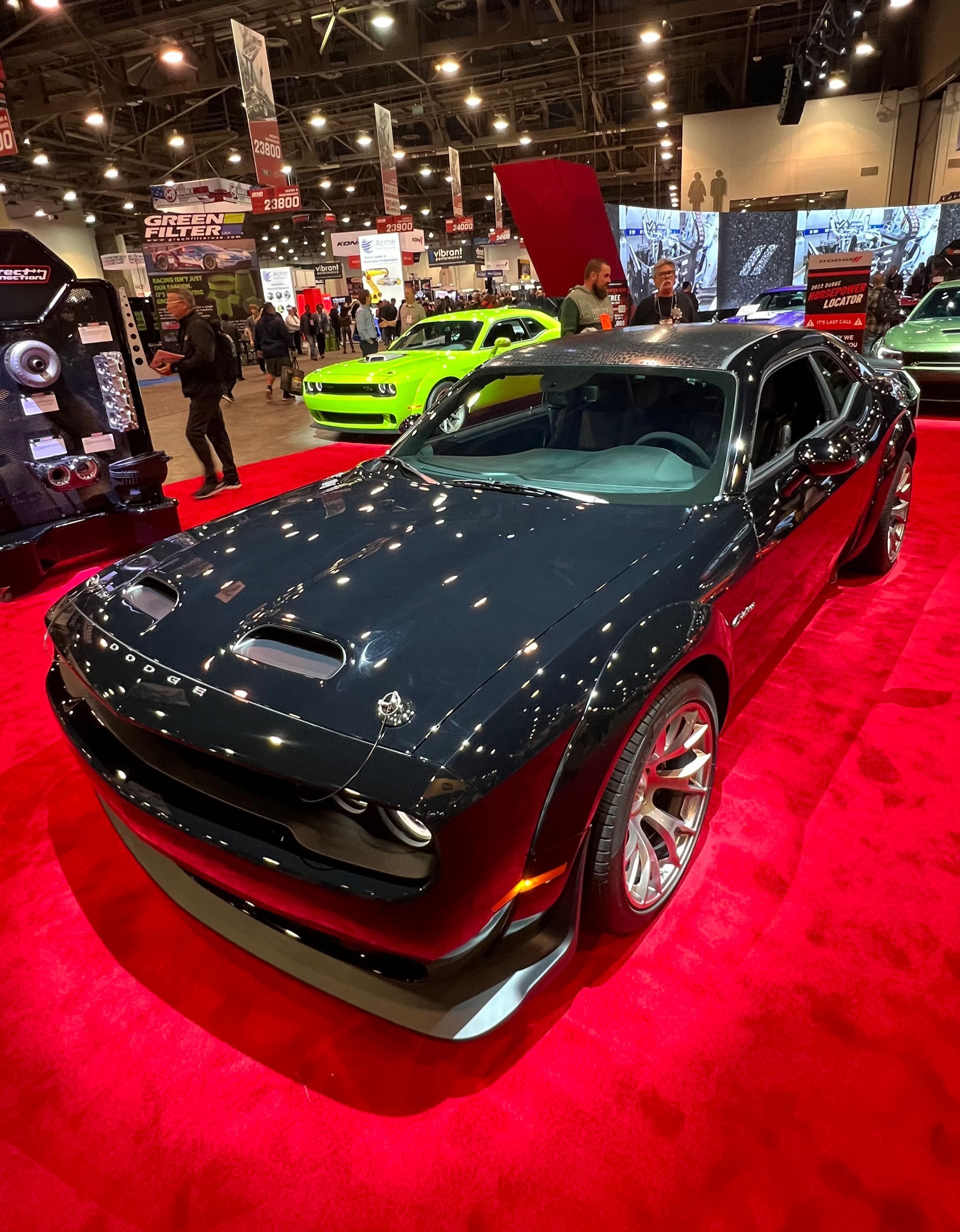
Dodge Challenger in the Dodge Booth
Sick Direct Connection Dodge Durango in the Dodge Booth
Sick Direct Connection Dodge Durango Blown HEMI engine in the Dodge Booth

What were the trends at the SEMA Show?


The hot iron this year was, for the most part, similar to last year, with a few exceptions. 

Dodge Superbird ultra-clean high, dollar builds

Of course, ultra-clean high, dollar builds were the norm. The overlanders were gaining popularity, and interesting guest builds were found on the show floor. The ever-present classic car iron with modern power plants and retro mods are always a favorite. 

There were a lot of ‘Donks’

Donk at the SEMA Show

There were more truck donks, or “Tonka Donks” as we call them (patent pending), than we have ever seen. Almost more Tonka Donks than any other category of iron! 


We also learned that if you have Tonka Donks, you must have a train horn to go with it!

Truck donks, or “Tonka Donks”

No paint builds


Another popular trend we saw was the “no paint” deal. A paint job is typically graded, critiqued, and judged by how good the metalwork is underneath. 


What better way to show just how good your metalwork is than having no paint? 


Everything is laid bare for all to see. No hiding. Only your skill and mastery of metal shows. It’s especially impressive to see the beauty of the pure metal bodies and the incredible craftsmanship.

One of many No paint builds

Preserving the right to modify and race our cars and trucks


Compared to modern cars, the ’60s and 70’s cars have finally lost their “fast” status. They were fast for a long time. Especially through the malaise era of the 80s when the new cars were turds. 


Current cars are faster than anything before them. Owning an old car now is about cruising and style instead of ruling the road. 


Old and new cars are great but do different things and give different experiences. We wonder just how long these inflated muscle car prices will hang on considering aging baby boomers will soon be trying to sell their beloved muscle cars they’re no longer able to drive to a market of car hating millennials. 


We were glad to see the SEMA Political Action Committee is active in preserving our right to modify and race our cars and trucks. There are ongoing attempts to ban gasoline, ban access to land, and ban your right to modify your car. The RPM Act (Recognizing the Protection of Motorsports) was a huge initiative by SEMA to save these rights and was the most bipartisan supported bill last year. Although it did not pass, they have built momentum and are charting a new path forward for 2023. SEMA PAC supports these congressional efforts and is a very worthwhile organization to donate to preserve our car culture for years to come.


SAVE OUR RACE CARS


Hoonigan Audi S1 Hoonitron and EV’s


Along those lines, the ever-present push to go all-electric persists. We attended the Ken Block & Brian Scio presentation. Ken and Brian attempted to push the limits of performance of what’s available in electric power by unveiling the Hoonigan Hoonitron and the electric khana video.

Brian Scio &and Ken Block presentation

We’re die-hard ICE fans, but we witnessed what the all-wheel-drive Hoonitron did on Vegas's streets and agreed it was undeniably cool! What they did in cooperation with Audi development and their engineers was the birth of something new. 


Definitely pushing EVs to the limit.


The loss of Ken Block was felt by all of us here, and as an industry, we are diminished. #kenblock43 #kb43ver


Mike Copland and the rise of hydrogen 


We don’t feel that quiet EVs are the only band-aid to a clean future for the planet. 


Arrington Performance CEO Mike Copland and his visionary 1964 Ford Falcon, which was revealed at the Redline booth, could be the answer we’re looking for. 


His creation is cleaner than the cleanest EV. 


Why?


Green hydrogen, that’s why! 


It runs on hydrogen, and the only emission is water. We’re talking about a zero-carbon footprint! The creation of hydrogen is zero carbon and utilizes wind and hydroelectric power.

Arrington Performance CEO Mike Copland and his visionary 1964 Ford Falcon

We reported on his groundbreaking hydrogen-powered truck last year, and he’s back with even new promising developments. 


What he’s doing now is nothing short of amazing.


Copeland has continued to develop the tech since its introduction at SEMA last year. Hydrogen itself explodes fast, three times as fast as gasoline. It has the potential for powerful, more efficient engines with zero emissions.


He’s not the only one who has made this realization. 


Google has made big commitments to hydrogen and other places like Walmart and Amazon, which already have fleets of hydrogen-powered vehicles in their distribution centers while producing hydrogen on-site. 


The new hydrogen infrastructure is coming, and new refineries owned by companies like Philips 66 are coming online. 


Las Vegas currently has the largest hydrogen production with a plant that could support 40,000 vehicles. Last year there were hardly any! Not to mention 3M has developed a powder that creates large amounts of hydrogen. 


Another breakthrough is one that was stumbled upon when the power went out during the hydrogen production process. When they returned, they found ten times more hydrogen was produced in the darkness than in the light! Who’d have thought? The tech is evolving more rapidly than anyone predicted.


A key to the development of hydrogen in cars is overcoming its extreme volatility. Copeland’s team made the breakthrough of using port injection of water (while the hydrogen is direct injected). 


The water slows the explosion enough to make the combustion much more controllable and efficient. 


The exciting news is that Copeland is developing a system allowing you to retrofit your ICE car to run on hydrogen. 


Think of the possibilities! 


An affordable easy bolt-on hydrogen kit for your car. 


There are over 190 million cars already on the road, all being able to convert to hydrogen. Electric can’t say that. A solution like this is so much more cost-effective than everyone selling their ICE cars and buying brand-new expensive electric cars. 


The bonus for us car guys is a hydrogen car sounds like an ICE car. Not quiet and soulless like an EV, but raucous and loud like a supercharged V8! 


The hydrogen retrofit kit being developed is so far along that they predict it will get CARB zero emissions certification by the end of the year. Predictions are the hydrogen conversion kits should be available in late 2024 or early 2025. 


Let’s hope so!

Get in touch today.

By Shanna Cathey August 20, 2026
The average age of a light vehicle in the United States is now 12.8 years, according to the latest publicly released national benchmark from S&P Global Mobility (the firm completed its spinoff into an independent company, now called Mobility Global, in July 2026, though its research is still widely cited under the S&P Global Mobility name). For the automotive aftermarket, that means a growing population of vehicles entering the years when maintenance, repair, replacement parts, diagnostics, and upgrades become increasingly important. The American vehicle fleet is getting older, and it's changing how aftermarket businesses need to think about growth. S&P Global Mobility reports that the U.S. fleet has grown to 289 million light vehicles in operation. Passenger cars now average 14.5 years old, while light trucks average 11.9 years. The high-volume 2015 through 2019 model years are also moving deeper into the aftermarket service cycle as more vehicles leave their original warranty coverage. For independent repair shops, parts suppliers, restoration specialists, performance businesses, and custom builders, the opportunity is substantial. It is not automatic, however. The businesses positioned to benefit will be the ones prepared to service an aging but increasingly technical vehicle population. Why Does an Aging Vehicle Fleet Create Aftermarket Opportunity? Older vehicles generally require more frequent maintenance and a wider range of repairs. Wear items reach the end of their service life. Seals, wiring, suspension components, cooling systems, electronics, and emissions equipment begin to demand more attention. Owners also start making larger decisions about whether to repair, restore, upgrade, or replace the vehicle. S&P Global Mobility identifies vehicles between six and 14 years old as a prime range for aftermarket service. Its research indicates that vehicles in this age range, along with even older models, are expected to represent at least 70% of vehicles in operation for several years. The newest industry forecast reinforces that opportunity. In June 2026, the Auto Care Association and MEMA Aftermarket Suppliers projected that the U.S. light-duty automotive aftermarket would grow 5.2% in 2026. The market is expected to surpass $500 billion by 2029, supported by the aging fleet, increasing vehicle complexity, and continued consumer reliance on personal transportation. Why Are Americans Keeping Vehicles Longer? High new and used vehicle prices and broader economic uncertainty continue to influence replacement decisions. Many drivers would rather invest in a vehicle they already know than take on the cost of replacing it. Modern vehicles are also durable enough to remain useful well beyond the point when earlier generations of owners may have traded them. From the shop side, the pattern is familiar. A customer says, "I just need it to last another year." Then one year becomes three. The truck remains essential to the business. The SUV stays in the family. The daily driver becomes a project because the owner would rather improve it than start over with another payment. This is where the aftermarket becomes essential. It gives vehicles a second, third, and sometimes fourth life. A 12-Year-Old Vehicle Is Still a Modern Vehicle An older fleet does not mean a simpler repair environment. A 12-year-old vehicle can still contain numerous control modules, emissions equipment, infotainment systems, electronic security features, networked sensors, and early-generation advanced driver-assistance systems. Shops must continue investing in technician training, scan tools, software subscriptions, service information, programming equipment, and calibration procedures. This is also why the Right to Repair issue remains relevant. As Motorhead Digital covered in Part 1: The Right to Repair Fight and the Freedom to Fix Victory , recent federal action created meaningful progress around emissions-related repair information and aftermarket emissions compliance. However, broader questions involving telematics, proprietary software, cybersecurity access, and non-emissions repair data remain unresolved. Older vehicles need more than replacement parts. They need judgment. They need technicians who understand the vehicle as a complete system and can distinguish a smart repair from a poor investment. They need suppliers with accurate fitment data and specialists who can combine traditional craftsmanship with modern diagnostic discipline. Which Aftermarket Businesses Stand to Benefit? Independent mechanical shops can benefit from increased demand for preventive maintenance, diagnostics, suspension work, cooling-system repairs, electrical repairs, emissions service, and age-related wear components. Parts manufacturers, distributors, and retailers can benefit from sustained demand across a wider range of model years. Accurate fitment data, inventory planning, and technical support become even more important when the active vehicle fleet spans decades. Restoration, performance, and custom shops have another opportunity. As replacement costs remain high, some owners will choose to improve vehicles they already own through: Drivability upgrades Modernized electronics Braking and suspension improvements Engine work Interior restoration Full custom or restoration builds The aging fleet is also increasingly diverse. S&P reports that battery-electric vehicles average 3.7 years old, plug-in hybrids average 4.9 years, and traditional hybrids average 6.4 years. Those vehicles will create additional service opportunities as they age, but they will also require new training, safety processes, tooling, and parts knowledge. Trust Becomes More Important as Repair Decisions Get Bigger The owner of a 12- or 15-year-old vehicle may be deciding whether to spend several thousand dollars on a vehicle with limited market value but significant practical or emotional value. That customer is not only buying a repair. They are buying confidence in the recommendation. Shops need to explain: What is urgent What can wait What may fail next Whether the proposed work makes financial sense Which repairs can be completed in phases What can be upgraded Clear inspections, photos, videos, written estimates, and phased repair plans help customers make informed decisions without feeling pressured. Motorhead Digital's Trust, Loyalty & Relationships: The Real Shop Advantage explains why trust often begins before a customer enters the shop. People study reviews, websites, project photos, and social media to decide whether a business looks credible, transparent, and capable. Pricing communication matters too. Older vehicles can expose hidden problems, discontinued parts, long lead times, and changing supplier costs. Tariffs, Pricing Pressure, and How Auto Shops Can Communicate Value Better offers practical guidance for explaining those variables without apologizing for charging appropriately.
Level 7 Motorsports Rebrands Its Parts Store as Spirit and Speed
By Barry Alt August 5, 2026
Level 7 Motorsports rebrands its performance parts store as Spirit and Speed, featuring an expanded parts lineup and a refreshed Shopify website.
A smiling automotive technician in a repair shop raises both fists beneath a banner.
By Shanna Cathey & Barry Alt July 22, 2026
The automotive right to repair battle just saw a massive victory with the Freedom to Fix memorandum. Learn how independent shops can leverage this to win.
AI,
By Shanna Cathey June 11, 2026
AI won't replace your technicians, but it can make your shop faster, sharper, and more visible. Here are 5 practical ways performance, restoration, and custom shops can use AI in 2026.
Macro shot of a workord : “Tariffs, pricing pressure, & how auto shops can communicate value better”
By Shanna Cathey May 1, 2026
Tariffs are squeezing the specialty automotive aftermarket. Here's how restoration, custom build, and performance shops can communicate pricing clearly, build customer trust, and protect their businesses as costs climb.
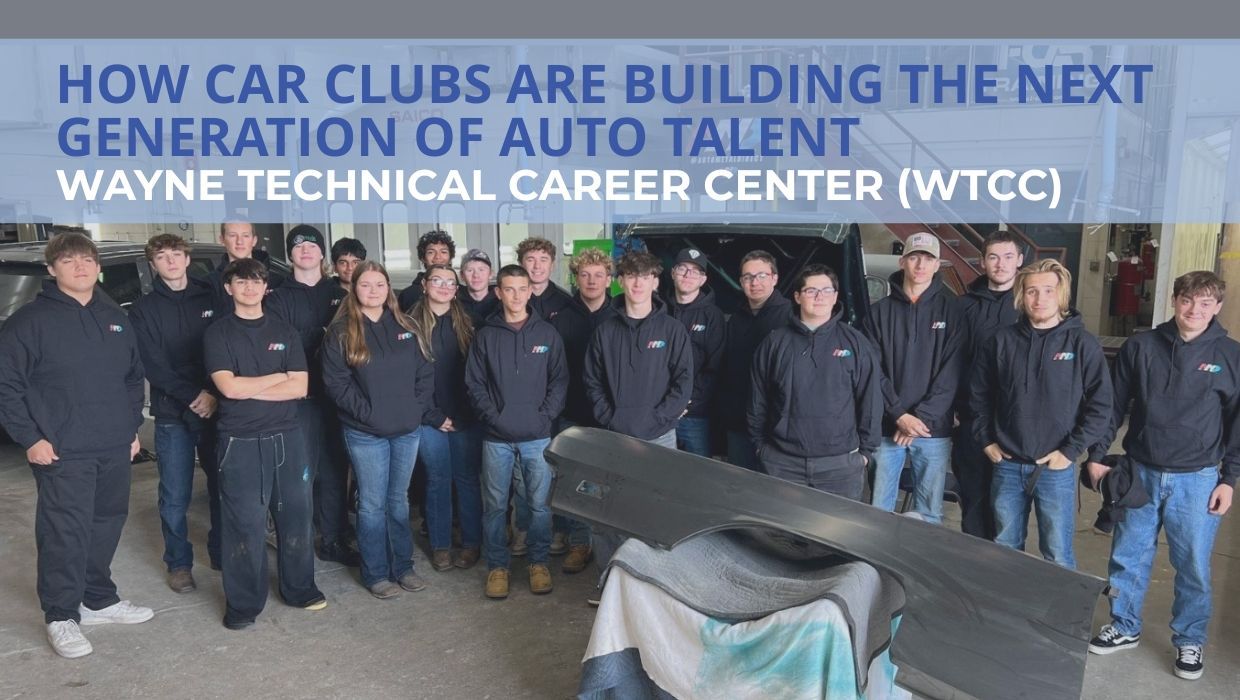
Students in Wayne Technical Career Center auto shop posing in hoodies around car body panel
By Keith Bourgeois April 10, 2026
What started as a car show became a mission to inspire young builders. See how students are gaining real skills while helping preserve automotive culture.
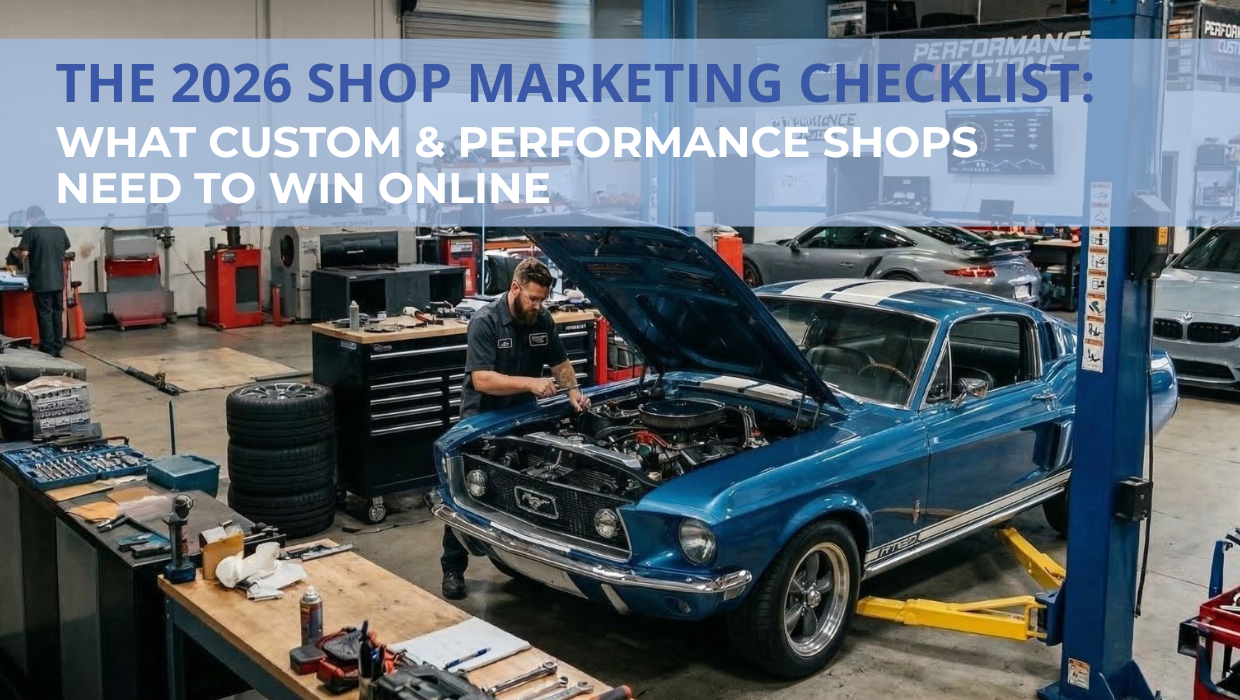
Automotive technician working on a classic blue Ford Mustang inside a professional performance shop
By Shanna Cathey March 13, 2026
A practical 2026 marketing checklist for custom car, restoration, and performance shops. Learn the essential digital marketing strategies every automotive shop needs to increase visibility, generate leads, and win more builds online.
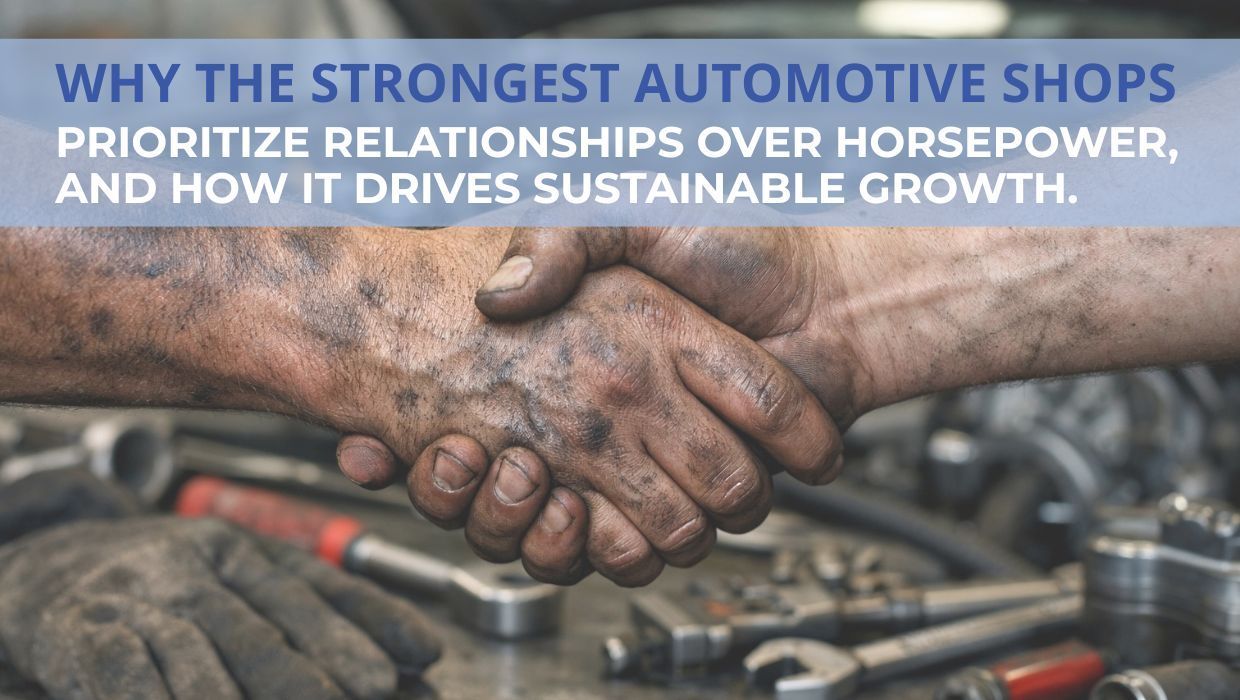
Two dirty hands shaking, text: Automotive shops prioritize relationships for growth.
By Grace Caple February 16, 2026
Trust isn't a buzzword in the automotive aftermarket, it's currency. Discover how successful shops build loyalty, earn trust, and create lasting customer relationships that fuel long-term growth.
Image of Porsche in a performance shop in the winter
By Shanna Cathey & Barry Alt January 21, 2026
Your shop may be slow in the winter, but it's the perfect time to fix your Auto Restoration, Performance, and Custom Build shop marketing. Learn why winter is ideal for systems, strategy, and growth.
AI’s Place in Automotive Aftermarket Shops - PART 2
By Barry Alt December 13, 2025
How artificial intelligence can power your company’s engine behind the scenes.
Show More