Motorhead Articles

Get Your Marketing in Gear

10 Ways To Grow Your Shop or Online Store With Organic Marketing

Barry Alt • October 31, 2023

Marketing your automotive aftermarket restoration, performance, race and restyling shop goes beyond showcasing your products and services – it's about building connections that fuel growth, customer loyalty, and industry recognition.

Organic Marketing

Organic marketing, in particular, takes center stage in propelling your automotive aftermarket business to new heights. 


Unlike the traditional, pedal-to-the-metal marketing approach, a successful organic marketing strategy follows a smoother route. It generates consistent traffic and nurtures customer engagement over time, all without the costs of paid methods. While we were writing this article, we also learned that a surprising 86% of people ignore paid advertisements.


Here, we'll delve into the world of organic marketing, revealing the top ten ways to leverage organic campaigns for promoting your shop.


Let’s kick things off!

What is organic marketing?


Organic marketing revolves around crafting a strategic approach that continually drives valuable traffic to your business without solely relying on paid methods or no methods at all. 49% of marketers say that organic search has the best ROI.


It's about having real conversations and sharing genuinely helpful content and information. You're not just saying, "buy this" or "choose our business," you're showing why doing so would be a great investment through engaging stories and helpful information.


Rather than relying on immediate paid visibility, an organic marketing strategy focuses on creating a lasting impact, gradually establishing your brand as a trusted authority in your industry, unlike paid advertising that goes away if you stop funding it, organic marketing drives visibility and awareness for the long term.

Time and Money Seesaw

10 steps of how to use organic marketing for business growth


Here are ten useful ways to leverage the power of organic marketing to boost your shop’s online presence: 


1.  Define your target audience


When you're in the automotive aftermarket industry and want to attract new customers, it's essential to know exactly who you're trying to reach.


Your ideal customers are those who have a passion for cars and want to enhance their vehicle's appearance, performance, or both. 


These could be car enthusiasts who love to personalize their rides, collectors seeking to restore classic cars to their former glory, or individuals looking to boost their vehicle's power and performance.


By grasping their preferences and challenges, you can tailor your marketing strategies to resonate with them effectively.


Pro Tip: Comprehensive understanding of your target audience ensures your marketing efforts hit the mark, fostering genuine engagement and sustained loyalty.


Organic Marketing


2.  Develop a quality website that converts

A standout website is crucial when promoting your shop and boosting organic traffic. 


This online platform serves as your virtual showroom or online store and the first impression for potential customers. Here's how to make your website shine:

  • Make it engaging and mobile-friendly: Design a website that captures attention and works seamlessly across all devices, including smartphones and tablets. Users form an opinion about a website in just 0.05 seconds.
  • Design and layout matter: Use design, layout, and content to showcase your brand's personality. 40% of users won’t engage with a website if its layout is unattractive.
  • Create a cohesive visual identity: Use a distinctive logo that's easy to recognize and remember. Choose a harmonious color scheme that resonates with your brand's vibe and style.
  • Showcase your work and/or products: Use high-quality images and videos to display your best work, including before-and-after photos.
  • Provide easy navigation: Use easy-to-navigate menus and clear calls to action to guide visitors to the information they seek. Website visitors spend an average of 6.44 seconds focused on the main navigation menu.
  • Include customer testimonials: Share the positive experiences of past clients through testimonials.

Pro Tip: When crafting your website, remember that it often shapes customers' first impressions of your business. Prioritize a design that's user-friendly, visually appealing, and content-rich to create a positive impact on visitors. We highly recommend that if you don’t have an in-house photographer you hire a professional photographer.

3.  Prioritize content marketing


Content marketing is a powerful tool for connecting with your audience and is a great tool to help your site show up in search, as Google loves great content that’s informative and helps your clients and prospects.


Here's how to effectively engage your audience through educational or entertaining content:


  • Helpful blog posts: Share articles and guides about restoration, tuning, and restyling on your website. Brands with a dedicated blog have a 55% more traffic rate than those that don’t.
  • How-to guides: Empower enthusiasts with step-by-step guides for DIY tasks.
  • Behind-the-scenes: Showcase transformations and stories of expertise.
  • Visual Social Media platforms: Use Instagram and Facebook to write about and share photos of projects that you’re working on in the shop.
  • Informative articles: Address common questions and concerns with informative articles.


Pro Tip: By providing valuable insights via organic content, you'll engage with your audience and establish your shop as a reliable expert that they’re looking for. Helping increase your website’s search rank in the process.


4.  Focus on search engine optimization (SEO)


By prioritizing search engine optimization, you'll amplify your shop's online presence. Pay attention to these critical aspects:


  • Keyword optimization: Sprinkle your website and content with relevant keywords that relate to your business. Use keyword phrases that your clients are using in their searches to boost your rankings in search engines like Google. If Google doesn’t know that you offer products or services, then you will not show up in search when your prospects are searching to find that product and service you offer.
  • Local SEO: Implement local SEO strategies to attract local customers in your targeted geographic area. Some examples include claiming and verifying your Google Business Profile listing, creating blog posts, articles, or landing pages that focus on local topics or events, and listing your business in local directories relevant to your industry.
  • Don’t forget about social media: When posting to social media, make sure to include important keyword phrases in your post copy and ALT tags, as social media posts, especially LinkedIn, will show up in search results.


Currently, organic traffic is responsible for 53% of traffic to all websites.


Pro Tip: Using the right keywords and optimizing for your local area can greatly increase how many people find your shop online. This helps you connect with customers exactly when they're looking for what you offer.

5.  Use social media marketing


Social media channels are pivotal in modern marketing strategies, providing businesses with dynamic platforms to connect with their target audience.


Follow these useful tips to get the most out of social media marketing:


  • Choose the right platforms: Pick social media platforms that match your industry and audience. 
  • Content strategy: Create diverse content that resonates with your audience's interests. 
  • Consistent posting: Post regularly to help maintain your online presence. 
  • Engage and Interact: Respond promptly to comments, messages, and mentions. 
  • High-quality visuals: Invest in high-quality visual content like images and videos that align with your brand identity. 
  • Hashtags and trends: Use relevant hashtags and trends to expand your reach beyond current followers. 
  • Influencer collaborations: Partner with industry influencers to reach a wider audience and enhance your brand's credibility.
  • Optimize your profiles: Make sure that all of your social media channel profiles are aligned with your business and that they all correctly match your brand and messaging


Don’t forget about LinkedIn: If you don’t have a LinkedIn business page and your project and products are targeted at the high-income market, get one started today. Here are some stats that will convince you to get your business on LinkedIn.


  • 10 million executives and 37% of US adults use LinkedIn
  • Over 50% of LinkedIn users earn $75,000 or more per year. 
  • 4 out of 5 people on LinkedIn “drive business decisions”
  • 45% of content readers on LinkedIn fall under “upper management” in companies
  • 40% of marketers surveyed indicate LinkedIn as the most effective channel for driving high-quality leads


Pro Tip: Make your social media strategy genuine and engaging, crafting a compelling narrative that builds a strong community around your brand.


6.  Implement email marketing 


Email marketing is a powerful tool that puts you in direct conversation with individuals who are genuinely interested in your products or services. 46% of customers prefer to be contacted by brands via email.


By personalizing your messages, you can communicate effectively and establish long-lasting connections with your subscribers. 


With its cost-effective nature, email marketing aligns seamlessly with other marketing strategies, amplifying their impact. According to Demandsage.com, for every $1 spent on email marketing, email marketing generates $36 in sales.


Integrating it with social media posts, content marketing, and more creates a unified brand presence that reaches your audience across various touchpoints.


Add an email newsletter sign-up form to your website. Even if you’re not yet ready to start email marketing to your clients and prospects, you can start building that list now.


If you’re already using email marketing, don’t forget to review your stats. Look at your open, click, and unsubscribe rates to see what works and what doesn't. Don’t be afraid to adjust your content, subject lines, or the day and time you send emails. Mondays have the highest opening rate at 22%, while Sundays have the lowest with 20.3%. 


Pro Tip: Maximize the impact of your email campaigns by using automated email personalization to deliver the perfect message to the right person at the ideal time.

Social Media

7.  Showcase customer reviews and testimonials


Harness the impact of customer reviews and testimonials to elevate your auto aftermarket shop or online store. 


These authentic endorsements create a compelling narrative of customer satisfaction that resonates deeply with your current patrons and potential automotive enthusiasts.


These testimonials serve as powerful endorsements, turning content customers into advocates. They offer tangible proof of your shop's ability to deliver quality services and products while fostering trust within the automotive community.


Pro Tip: Visual testimonials provide a dynamic and relatable way to showcase customer satisfaction. By sharing images or videos of real customers with their enhanced vehicles, you create a stronger emotional connection with your audience.


8.  Collaborate and network 


Broaden your horizons by establishing collaborations and networking within the auto aftermarket industry.


  • Strategic partnerships: Team up with related businesses for mutual growth.
  • Sponsor grass roots race teams or events: Sponsoring a team or event is a great way to gain visibility for your brand and business.
  • Industry events: Attend or display your products and work at trade shows like the SEMA Show, Goodguys shows, and NSRA events and gatherings to connect with potential clients.
  • Networking: Build relationships, gain insights, and share expertise.
  • Volunteer: Volunteering with SEMA and other organizations is a great way to meet like-minded business owners and gain new connections and clients.
  • Online and local: Engage in online communities and local events.
  • Thought leadership: Showcase your expertise to enhance credibility and attract clients.


Pro Tip: Exploring collaborations beyond your industry can open new avenues for growth. Consider partnering with businesses that align with your values and offer complementary services, allowing you to tap into fresh markets and expand your reach.

Marketing Graphic

9.  Influencer relationships 

Target Audience

Leverage influencer partnerships to increase brand awareness and amplify your brand's impact as part of your auto shop marketing efforts. Influencer marketing has an ROI of 650%, as marketers get $6.5 for every $1 invested.


Collaborate with key figures who share your audience to tap into their engaged followers, expanding your reach and enhancing your credibility.


Their authentic endorsement adds a trusted layer to your brand, resonating with their dedicated followers and fostering a meaningful connection that drives interest and conversions.


Pro tip: When collaborating with influencers, ensure you’re choosing those whose followers share a genuine interest in your products and services, and whose values align with yours.

10.  Monitor your progress because the data matters


It's important to stay in the loop about the effectiveness of your organic marketing efforts. 


Take advantage of tools that help you keep tabs on essential details, like how many people are checking out your website, how people are reacting on social media, and how your email campaigns are performing. 


Make sure you have these key tools setup and monitored:


  • Google Analytics
  • Google Search Console
  • Social media insights
  • Other stats available to you.


Pro Tip: Regularly tracking progress lets you identify what's working and what needs tweaking. By analyzing the gathered data, you gain insights that guide your actions and enable you to fine-tune your approach for better results.

Google Analytics

Key takeaway


In the competitive automotive aftermarket industry, effective marketing is your foundation for success. It's not just about showcasing products; it's about building connections that fuel growth, loyalty, and industry recognition.


Organic marketing takes center stage in propelling your business to new heights by impressing new and existing customers. Unlike traditional marketing methods, it offers a smoother, cost-effective route that nurtures ongoing traffic and customer engagement.


Each step plays a vital role in your journey, from understanding your audience and creating an engaging website to employing content marketing, SEO, and social media strategies.


Statistic Sources: Statista, Hubspot, Google, Demandsage, Neil Patel and Semrush


Searching for an organic marketing solution to promote your automotive restoration, performance, race, or restyling shop? the team at Motorhead Digital would love to assist you.



Barry Alt

BARRY ALT and his team at Motorhead Digital have over 25 years of experience in digital marketing and website development. They offer their DONE-FOR-YOU Location, Site and Marketing Maximizer™ programs that will supercharge your site, social media and your entire online presence so you attract better, high-value leads into your shop. You can reach him at (585) 766-9785, balt@motorheaddigital.com, or online at MotorheadDigital.com.


The SHOP Magazine
By Shanna Cathey August 20, 2026
The average age of a light vehicle in the United States is now 12.8 years, according to the latest publicly released national benchmark from S&P Global Mobility (the firm completed its spinoff into an independent company, now called Mobility Global, in July 2026, though its research is still widely cited under the S&P Global Mobility name). For the automotive aftermarket, that means a growing population of vehicles entering the years when maintenance, repair, replacement parts, diagnostics, and upgrades become increasingly important. The American vehicle fleet is getting older, and it's changing how aftermarket businesses need to think about growth. S&P Global Mobility reports that the U.S. fleet has grown to 289 million light vehicles in operation. Passenger cars now average 14.5 years old, while light trucks average 11.9 years. The high-volume 2015 through 2019 model years are also moving deeper into the aftermarket service cycle as more vehicles leave their original warranty coverage. For independent repair shops, parts suppliers, restoration specialists, performance businesses, and custom builders, the opportunity is substantial. It is not automatic, however. The businesses positioned to benefit will be the ones prepared to service an aging but increasingly technical vehicle population. Why Does an Aging Vehicle Fleet Create Aftermarket Opportunity? Older vehicles generally require more frequent maintenance and a wider range of repairs. Wear items reach the end of their service life. Seals, wiring, suspension components, cooling systems, electronics, and emissions equipment begin to demand more attention. Owners also start making larger decisions about whether to repair, restore, upgrade, or replace the vehicle. S&P Global Mobility identifies vehicles between six and 14 years old as a prime range for aftermarket service. Its research indicates that vehicles in this age range, along with even older models, are expected to represent at least 70% of vehicles in operation for several years. The newest industry forecast reinforces that opportunity. In June 2026, the Auto Care Association and MEMA Aftermarket Suppliers projected that the U.S. light-duty automotive aftermarket would grow 5.2% in 2026. The market is expected to surpass $500 billion by 2029, supported by the aging fleet, increasing vehicle complexity, and continued consumer reliance on personal transportation. Why Are Americans Keeping Vehicles Longer? High new and used vehicle prices and broader economic uncertainty continue to influence replacement decisions. Many drivers would rather invest in a vehicle they already know than take on the cost of replacing it. Modern vehicles are also durable enough to remain useful well beyond the point when earlier generations of owners may have traded them. From the shop side, the pattern is familiar. A customer says, "I just need it to last another year." Then one year becomes three. The truck remains essential to the business. The SUV stays in the family. The daily driver becomes a project because the owner would rather improve it than start over with another payment. This is where the aftermarket becomes essential. It gives vehicles a second, third, and sometimes fourth life. A 12-Year-Old Vehicle Is Still a Modern Vehicle An older fleet does not mean a simpler repair environment. A 12-year-old vehicle can still contain numerous control modules, emissions equipment, infotainment systems, electronic security features, networked sensors, and early-generation advanced driver-assistance systems. Shops must continue investing in technician training, scan tools, software subscriptions, service information, programming equipment, and calibration procedures. This is also why the Right to Repair issue remains relevant. As Motorhead Digital covered in Part 1: The Right to Repair Fight and the Freedom to Fix Victory , recent federal action created meaningful progress around emissions-related repair information and aftermarket emissions compliance. However, broader questions involving telematics, proprietary software, cybersecurity access, and non-emissions repair data remain unresolved. Older vehicles need more than replacement parts. They need judgment. They need technicians who understand the vehicle as a complete system and can distinguish a smart repair from a poor investment. They need suppliers with accurate fitment data and specialists who can combine traditional craftsmanship with modern diagnostic discipline. Which Aftermarket Businesses Stand to Benefit? Independent mechanical shops can benefit from increased demand for preventive maintenance, diagnostics, suspension work, cooling-system repairs, electrical repairs, emissions service, and age-related wear components. Parts manufacturers, distributors, and retailers can benefit from sustained demand across a wider range of model years. Accurate fitment data, inventory planning, and technical support become even more important when the active vehicle fleet spans decades. Restoration, performance, and custom shops have another opportunity. As replacement costs remain high, some owners will choose to improve vehicles they already own through: Drivability upgrades Modernized electronics Braking and suspension improvements Engine work Interior restoration Full custom or restoration builds The aging fleet is also increasingly diverse. S&P reports that battery-electric vehicles average 3.7 years old, plug-in hybrids average 4.9 years, and traditional hybrids average 6.4 years. Those vehicles will create additional service opportunities as they age, but they will also require new training, safety processes, tooling, and parts knowledge. Trust Becomes More Important as Repair Decisions Get Bigger The owner of a 12- or 15-year-old vehicle may be deciding whether to spend several thousand dollars on a vehicle with limited market value but significant practical or emotional value. That customer is not only buying a repair. They are buying confidence in the recommendation. Shops need to explain: What is urgent What can wait What may fail next Whether the proposed work makes financial sense Which repairs can be completed in phases What can be upgraded Clear inspections, photos, videos, written estimates, and phased repair plans help customers make informed decisions without feeling pressured. Motorhead Digital's Trust, Loyalty & Relationships: The Real Shop Advantage explains why trust often begins before a customer enters the shop. People study reviews, websites, project photos, and social media to decide whether a business looks credible, transparent, and capable. Pricing communication matters too. Older vehicles can expose hidden problems, discontinued parts, long lead times, and changing supplier costs. Tariffs, Pricing Pressure, and How Auto Shops Can Communicate Value Better offers practical guidance for explaining those variables without apologizing for charging appropriately.
Level 7 Motorsports Rebrands Its Parts Store as Spirit and Speed
By Barry Alt August 5, 2026
Level 7 Motorsports rebrands its performance parts store as Spirit and Speed, featuring an expanded parts lineup and a refreshed Shopify website.
A smiling automotive technician in a repair shop raises both fists beneath a banner.
By Shanna Cathey & Barry Alt July 22, 2026
The automotive right to repair battle just saw a massive victory with the Freedom to Fix memorandum. Learn how independent shops can leverage this to win.
AI,
By Shanna Cathey June 11, 2026
AI won't replace your technicians, but it can make your shop faster, sharper, and more visible. Here are 5 practical ways performance, restoration, and custom shops can use AI in 2026.
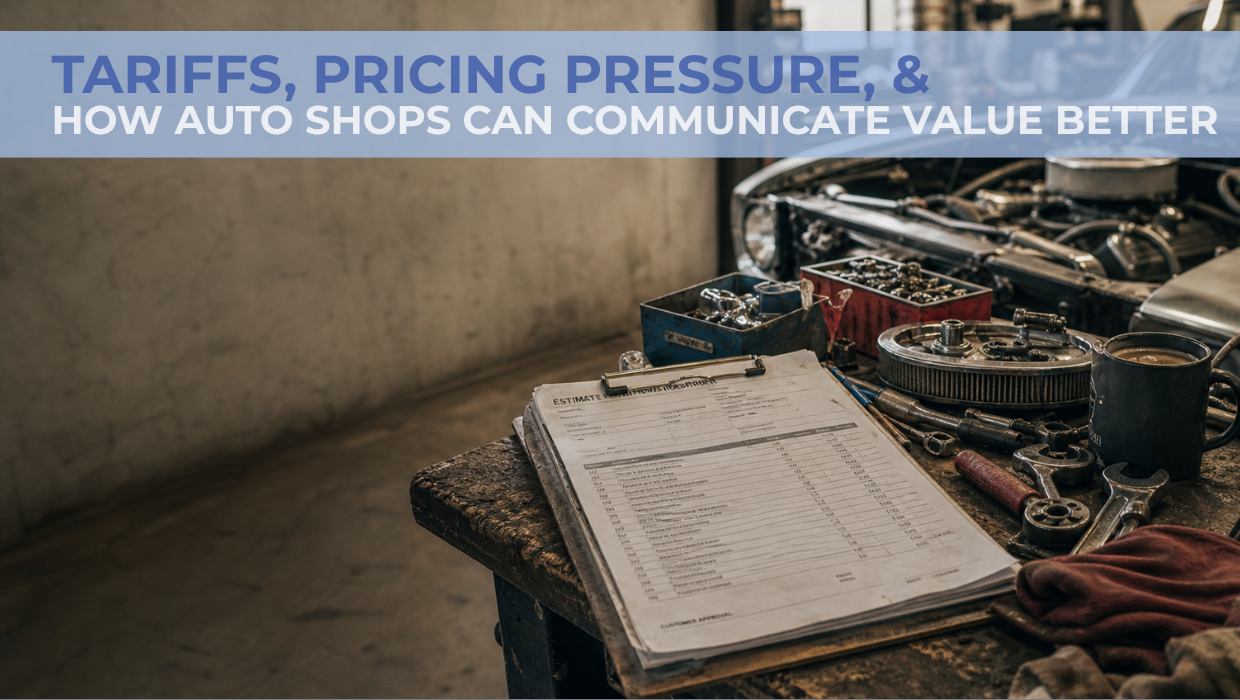
Macro shot of a workord : “Tariffs, pricing pressure, & how auto shops can communicate value better”
By Shanna Cathey May 1, 2026
Tariffs are squeezing the specialty automotive aftermarket. Here's how restoration, custom build, and performance shops can communicate pricing clearly, build customer trust, and protect their businesses as costs climb.
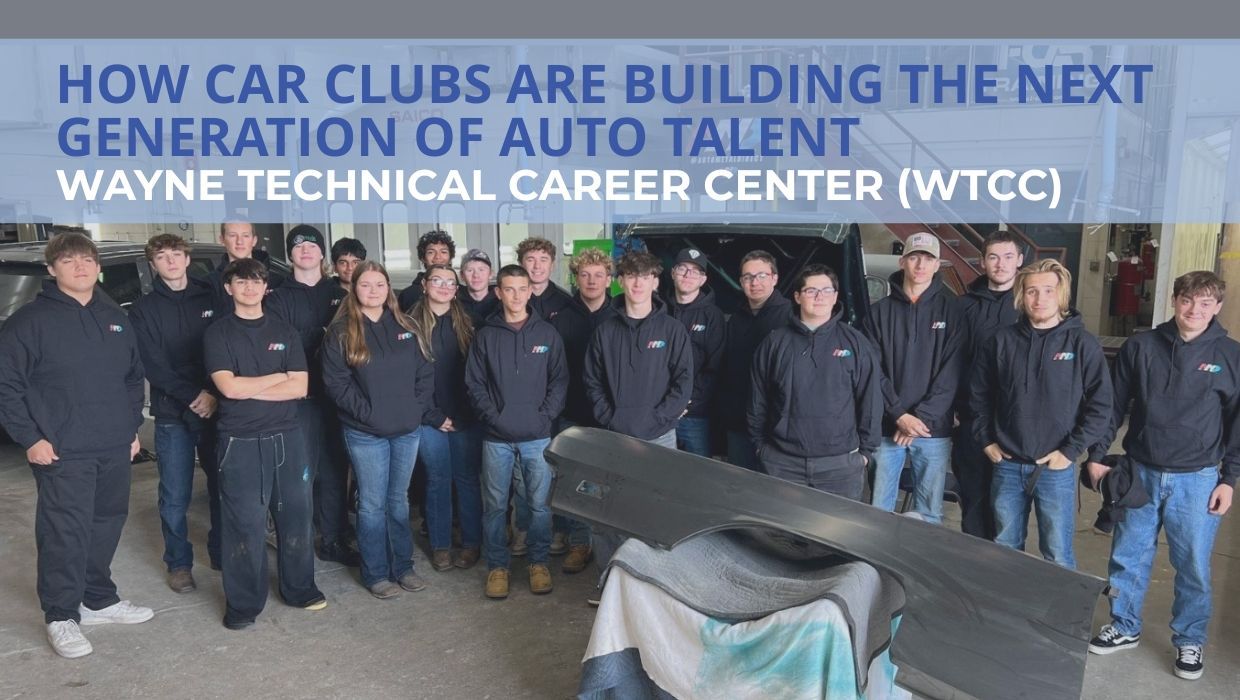
Students in Wayne Technical Career Center auto shop posing in hoodies around car body panel
By Keith Bourgeois April 10, 2026
What started as a car show became a mission to inspire young builders. See how students are gaining real skills while helping preserve automotive culture.
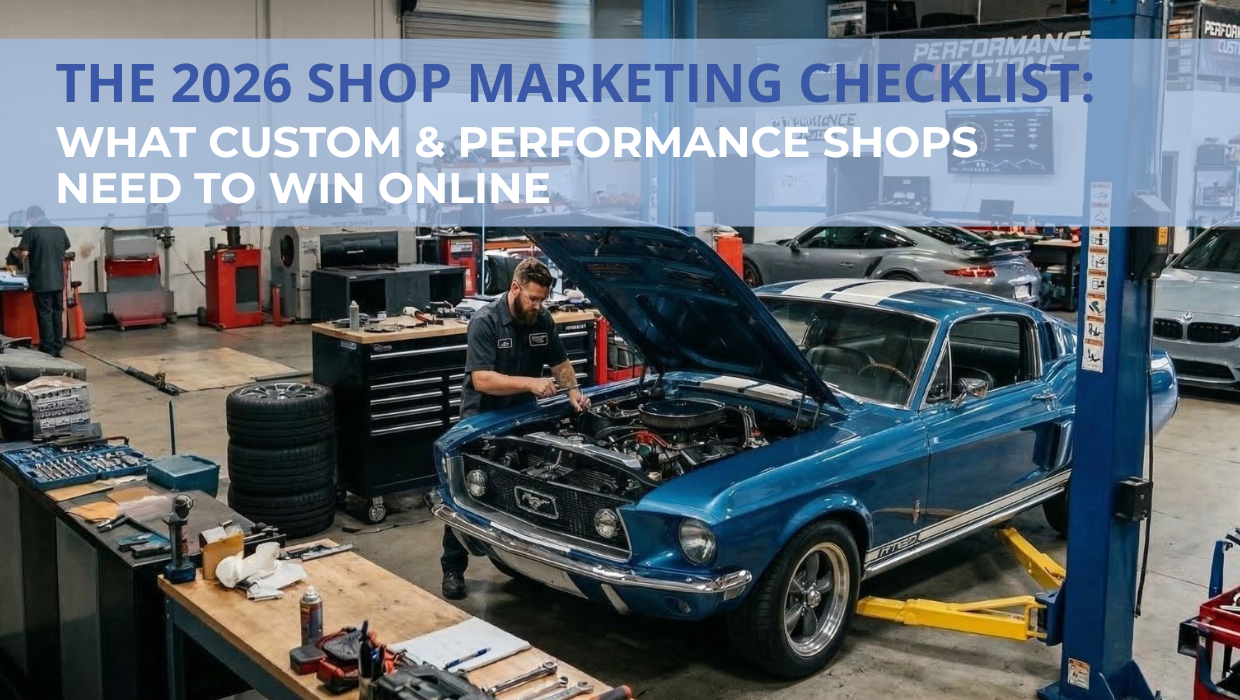
Automotive technician working on a classic blue Ford Mustang inside a professional performance shop
By Shanna Cathey March 13, 2026
A practical 2026 marketing checklist for custom car, restoration, and performance shops. Learn the essential digital marketing strategies every automotive shop needs to increase visibility, generate leads, and win more builds online.
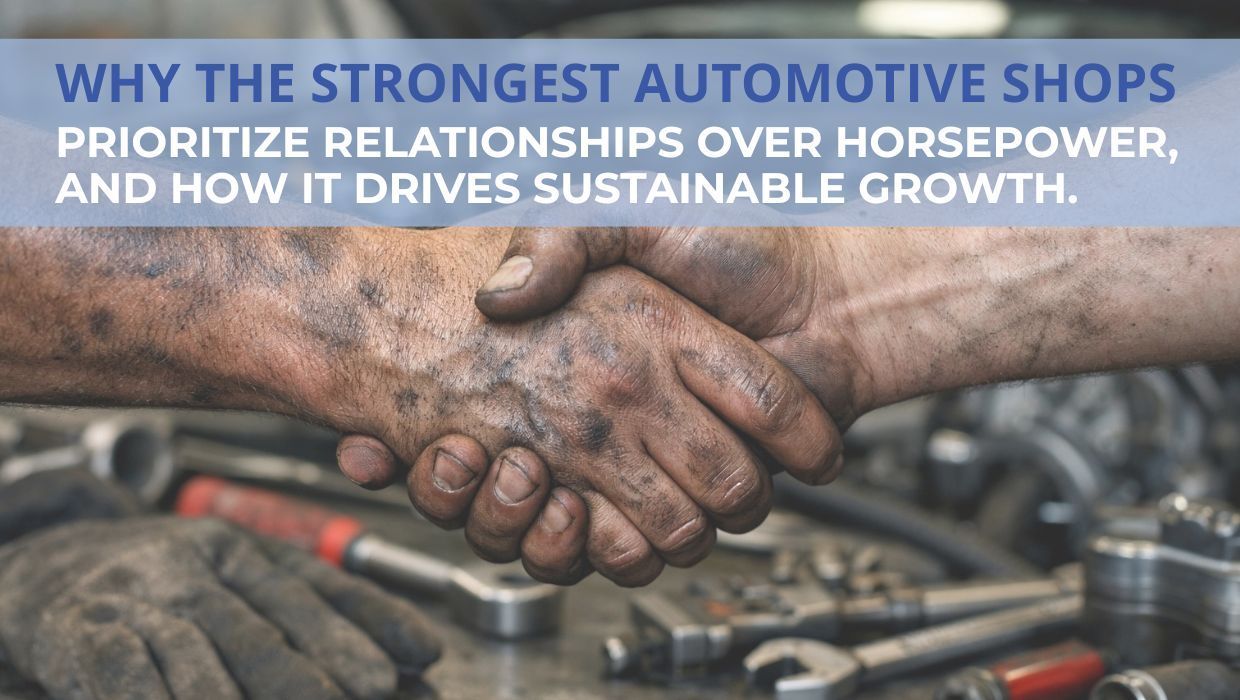
Two dirty hands shaking, text: Automotive shops prioritize relationships for growth.
By Grace Caple February 16, 2026
Trust isn't a buzzword in the automotive aftermarket, it's currency. Discover how successful shops build loyalty, earn trust, and create lasting customer relationships that fuel long-term growth.
Image of Porsche in a performance shop in the winter
By Shanna Cathey & Barry Alt January 21, 2026
Your shop may be slow in the winter, but it's the perfect time to fix your Auto Restoration, Performance, and Custom Build shop marketing. Learn why winter is ideal for systems, strategy, and growth.
AI’s Place in Automotive Aftermarket Shops - PART 2
By Barry Alt December 13, 2025
How artificial intelligence can power your company’s engine behind the scenes.
Show More