Motorhead Articles

Get Your Marketing in Gear

How To Get Your Time Back By Automating Your Business Processes

Barry Alt • September 16, 2022

When you hear someone talking about automation, you probably think of robots taking over human jobs - like self-driving cars or automated assembly lines - but don't worry, this isn't the type of automation we're talking about.

How to Get Your Time Back

The automated business processes we’re going to explore help to make pointless, repetitive tasks easier to manage. Automation allows your automotive aftermarket performance, restyling, race, and restoration shop to get more time back to focus on what matters - growing your business. 


If you want to start focusing more on building your business instead of wasting hours on pointless tasks, then integrating automatic business processes is the way to go. 


Today we'll explain precisely how automation works and how you can use it in your aftermarket auto shop.

What is business process automation?


Did you know that 97% of companies believe automating their processes is necessary for their online growth?


That's fantastic, but what is business process automation, and why is it so important?


Business process automation is where you use technology, tools, and programs to perform annoying repetitive tasks for you. This makes your processes more efficient and frees up your time to do more important things. 


There's a lot of technology and software out there that will help you automate your auto performance, restoration, and restyling shop. 


Automating business processes usually involves creating an automatic process for:


  • Customer relations
  • Marketing
  • Analytics 
  • Sales processes 
  • Employee management


By getting on top of automation for your business, you'll be able to manage your business a whole lot easier. With automation on your side, you can focus more time on building your shop up as an industry leader and the go-to place for auto restoration.

What are the benefits of automating processes for aftermarket auto shops?


1.  Reduce time wastage and cost

You'll have more time to spend on your business by automating your processes. You'll spend less time on boring tasks, there won't be any room for human error, and you'll save money and time getting a tool to automate it. 


When you automate your tasks, you're making them cheaper for your business


2.  Improve productivity

Handing off mindless tasks and freeing up your employee's workload will enhance productivity because they can focus on what matters. They'll be able to do more work on projects and concentrate on the clients they're working with. 


With automated processes, you'll be able to build a team that works better together. 70% of companies believe automation is necessary to create more effective teams for their business. 


Some of your team members might have even hated a particular task. By introducing automation to your business, they won't have to do the chore they hate so much. They'll be happier and can focus on other tasks in your shop. 90% of employees feel annoyed when they have to do repetitive and boring tasks that can be easily automated.


3. Quality is assured

When you add automation to your company, you can offer your clients consistent quality. When your client decides to get in contact with you, they'll always receive an instant response. 


Consistency constantly fluctuates when humans are involved, but with automated processes, you'll be able to give your audience consistent results.


4.  Enhanced communication

Communication is key to any great business. With automation, you can ensure your communication is always in top form. 


Automation ensures that every message reaches your clients without fail and that nothing gets lost between tasks. Thanks to automation, you'll be able to avoid situations where a person wasn't notified about a task being completed or a customer being contacted. 


This will keep you and your team on top of everything your clients are looking for without spending hours responding to emails and queries. 


5.  Keep customers happy

The ultimate benefit of automation is client satisfaction. Your goal as a company is to ensure all your clients are happy with your services, and with automation, your customers will get what they need much faster. 


If your customer is happy with your service, they will keep coming back and working with you. They might even recommend you to family or friends just because of how efficient you were on their project. So not only is automation key to improving repeat business, but it’s also great for increasing referrals too.

What can you automate in your aftermarket shop?


There are a lot of automation tools out there, and a lot of your business can be automated. Today we're going to look at the three areas we think you should focus on when it comes to automating your shop. 


1.  Customer service

The first place you should automate is your customer service. You can automate how you onboard clients, interact with them and communicate with them. 


An online calendar for scheduling is a great way to automate your booking system. Your clients sign up online, book in for a meeting, and it appears on your in-house calendar, making sure you never miss an appointment. 


Not only does this make it easier for you to onboard new clients, but it also makes it easier for your clients to book with you. 


Your customers also want their issues solved quickly. By adding email automation, they can instantly get replies to their queries. Email automation reduces the time you have to put into customer care and allows your clients to get what they need right away. 


Email automation means you don't have to respond to every email. Instead, you set up an automatic response. You can even set up replies to specific questions, which allows you to spend more time focusing on essential inquiries and other work around your shop. 


You can also use self-service portals, allowing clients to get all the necessary information themselves. Live chats that use AI or preloaded responses to frequently asked questions are also a great tool for automation. 


2.  Marketing

Do you hate spending hours trying to sort out your marketing? 


Then marketing automation tools are the answer! 


They let you manage your leads and marketing strategies without taking time away from the rest of your business. 


For example, you can use auto-response emails to nurture leads and secure new clients for your company, and you won't even have to reply. 


When potential clients sign up for your email marketing, they get sent an automatic email detailing everything they need to know about what your shop offers. It'll also show them how and why they should start working with you on their next auto restoration project.


With automation, you won't have to partake in the lead nurturing process. All you have to do is focus on restoring and upgrading the cars that come into your shop. 


Another great automation tool for marketing is social media post scheduling. 


Nobody wants to spend hours out of their day posting social media posts. Instead, you can get a month's load of social media updates ready and schedule them out in advance, so you don't have to worry about it. 


While you're working, your social media can look after itself!


3.  In-house operations

The last area you should look at when it comes to automation is your in-house operations. By streamlining your in-house operations with automated processes, you'll be able to save so much time and money. 


You can streamline:


  • Employee onboarding
  • Project management 
  • Event reporting 


But how do you automate in-house processes?


One of the ways you can automate them is by using an LMS (learning management system). An LMS will help you onboard new employees quickly without wasting time going through every inch of your company with them. 


Plus, by automating your employee onboarding, you will be able to improve employee retention by 82% and productivity by 70%


But employee onboarding isn't all automation can do. You can easily enhance your project management by using automation to keep essential data and information in one place.


Using tools like ClickUp, Teamwork, or Asana to stay organized and on top of tasks, you'll never fall behind on a project again! 


These tools will send notifications about tasks and update you when tasks are completed allowing you to always stay on top of your workload. 


We hope our blog post has helped you discover how to automate your business correctly to improve productivity, efficiency, and quality. 


If you're not sure how to automate your business or want some help setting up the right tools, our team is here for you. 


At Motorhead Digital, we've been helping aftermarket auto performance, restoration, and restyling shops reach their full potential online. 


Get in touch with us today to start improving your processes so you can pull ahead of the competition.

By Shanna Cathey August 20, 2026
The average age of a light vehicle in the United States is now 12.8 years, according to the latest publicly released national benchmark from S&P Global Mobility (the firm completed its spinoff into an independent company, now called Mobility Global, in July 2026, though its research is still widely cited under the S&P Global Mobility name). For the automotive aftermarket, that means a growing population of vehicles entering the years when maintenance, repair, replacement parts, diagnostics, and upgrades become increasingly important. The American vehicle fleet is getting older, and it's changing how aftermarket businesses need to think about growth. S&P Global Mobility reports that the U.S. fleet has grown to 289 million light vehicles in operation. Passenger cars now average 14.5 years old, while light trucks average 11.9 years. The high-volume 2015 through 2019 model years are also moving deeper into the aftermarket service cycle as more vehicles leave their original warranty coverage. For independent repair shops, parts suppliers, restoration specialists, performance businesses, and custom builders, the opportunity is substantial. It is not automatic, however. The businesses positioned to benefit will be the ones prepared to service an aging but increasingly technical vehicle population. Why Does an Aging Vehicle Fleet Create Aftermarket Opportunity? Older vehicles generally require more frequent maintenance and a wider range of repairs. Wear items reach the end of their service life. Seals, wiring, suspension components, cooling systems, electronics, and emissions equipment begin to demand more attention. Owners also start making larger decisions about whether to repair, restore, upgrade, or replace the vehicle. S&P Global Mobility identifies vehicles between six and 14 years old as a prime range for aftermarket service. Its research indicates that vehicles in this age range, along with even older models, are expected to represent at least 70% of vehicles in operation for several years. The newest industry forecast reinforces that opportunity. In June 2026, the Auto Care Association and MEMA Aftermarket Suppliers projected that the U.S. light-duty automotive aftermarket would grow 5.2% in 2026. The market is expected to surpass $500 billion by 2029, supported by the aging fleet, increasing vehicle complexity, and continued consumer reliance on personal transportation. Why Are Americans Keeping Vehicles Longer? High new and used vehicle prices and broader economic uncertainty continue to influence replacement decisions. Many drivers would rather invest in a vehicle they already know than take on the cost of replacing it. Modern vehicles are also durable enough to remain useful well beyond the point when earlier generations of owners may have traded them. From the shop side, the pattern is familiar. A customer says, "I just need it to last another year." Then one year becomes three. The truck remains essential to the business. The SUV stays in the family. The daily driver becomes a project because the owner would rather improve it than start over with another payment. This is where the aftermarket becomes essential. It gives vehicles a second, third, and sometimes fourth life. A 12-Year-Old Vehicle Is Still a Modern Vehicle An older fleet does not mean a simpler repair environment. A 12-year-old vehicle can still contain numerous control modules, emissions equipment, infotainment systems, electronic security features, networked sensors, and early-generation advanced driver-assistance systems. Shops must continue investing in technician training, scan tools, software subscriptions, service information, programming equipment, and calibration procedures. This is also why the Right to Repair issue remains relevant. As Motorhead Digital covered in Part 1: The Right to Repair Fight and the Freedom to Fix Victory , recent federal action created meaningful progress around emissions-related repair information and aftermarket emissions compliance. However, broader questions involving telematics, proprietary software, cybersecurity access, and non-emissions repair data remain unresolved. Older vehicles need more than replacement parts. They need judgment. They need technicians who understand the vehicle as a complete system and can distinguish a smart repair from a poor investment. They need suppliers with accurate fitment data and specialists who can combine traditional craftsmanship with modern diagnostic discipline. Which Aftermarket Businesses Stand to Benefit? Independent mechanical shops can benefit from increased demand for preventive maintenance, diagnostics, suspension work, cooling-system repairs, electrical repairs, emissions service, and age-related wear components. Parts manufacturers, distributors, and retailers can benefit from sustained demand across a wider range of model years. Accurate fitment data, inventory planning, and technical support become even more important when the active vehicle fleet spans decades. Restoration, performance, and custom shops have another opportunity. As replacement costs remain high, some owners will choose to improve vehicles they already own through: Drivability upgrades Modernized electronics Braking and suspension improvements Engine work Interior restoration Full custom or restoration builds The aging fleet is also increasingly diverse. S&P reports that battery-electric vehicles average 3.7 years old, plug-in hybrids average 4.9 years, and traditional hybrids average 6.4 years. Those vehicles will create additional service opportunities as they age, but they will also require new training, safety processes, tooling, and parts knowledge. Trust Becomes More Important as Repair Decisions Get Bigger The owner of a 12- or 15-year-old vehicle may be deciding whether to spend several thousand dollars on a vehicle with limited market value but significant practical or emotional value. That customer is not only buying a repair. They are buying confidence in the recommendation. Shops need to explain: What is urgent What can wait What may fail next Whether the proposed work makes financial sense Which repairs can be completed in phases What can be upgraded Clear inspections, photos, videos, written estimates, and phased repair plans help customers make informed decisions without feeling pressured. Motorhead Digital's Trust, Loyalty & Relationships: The Real Shop Advantage explains why trust often begins before a customer enters the shop. People study reviews, websites, project photos, and social media to decide whether a business looks credible, transparent, and capable. Pricing communication matters too. Older vehicles can expose hidden problems, discontinued parts, long lead times, and changing supplier costs. Tariffs, Pricing Pressure, and How Auto Shops Can Communicate Value Better offers practical guidance for explaining those variables without apologizing for charging appropriately.
Level 7 Motorsports Rebrands Its Parts Store as Spirit and Speed
By Barry Alt August 5, 2026
Level 7 Motorsports rebrands its performance parts store as Spirit and Speed, featuring an expanded parts lineup and a refreshed Shopify website.
A smiling automotive technician in a repair shop raises both fists beneath a banner.
By Shanna Cathey & Barry Alt July 22, 2026
The automotive right to repair battle just saw a massive victory with the Freedom to Fix memorandum. Learn how independent shops can leverage this to win.
AI,
By Shanna Cathey June 11, 2026
AI won't replace your technicians, but it can make your shop faster, sharper, and more visible. Here are 5 practical ways performance, restoration, and custom shops can use AI in 2026.
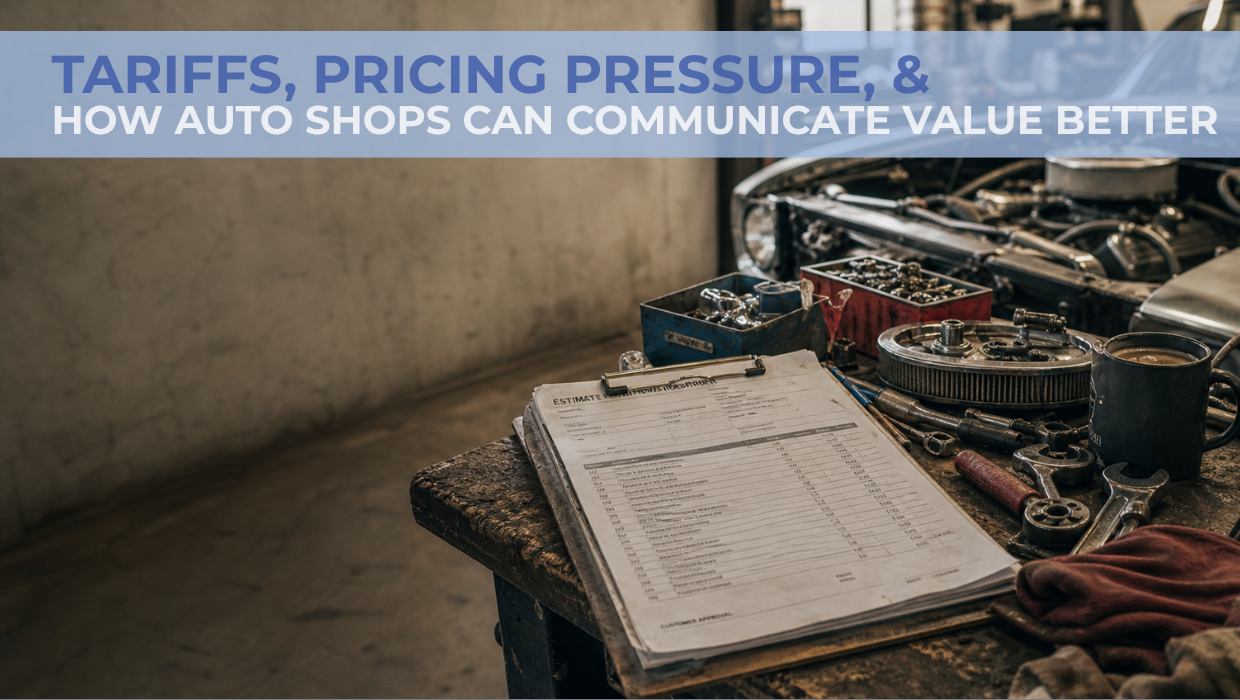
Macro shot of a workord : “Tariffs, pricing pressure, & how auto shops can communicate value better”
By Shanna Cathey May 1, 2026
Tariffs are squeezing the specialty automotive aftermarket. Here's how restoration, custom build, and performance shops can communicate pricing clearly, build customer trust, and protect their businesses as costs climb.
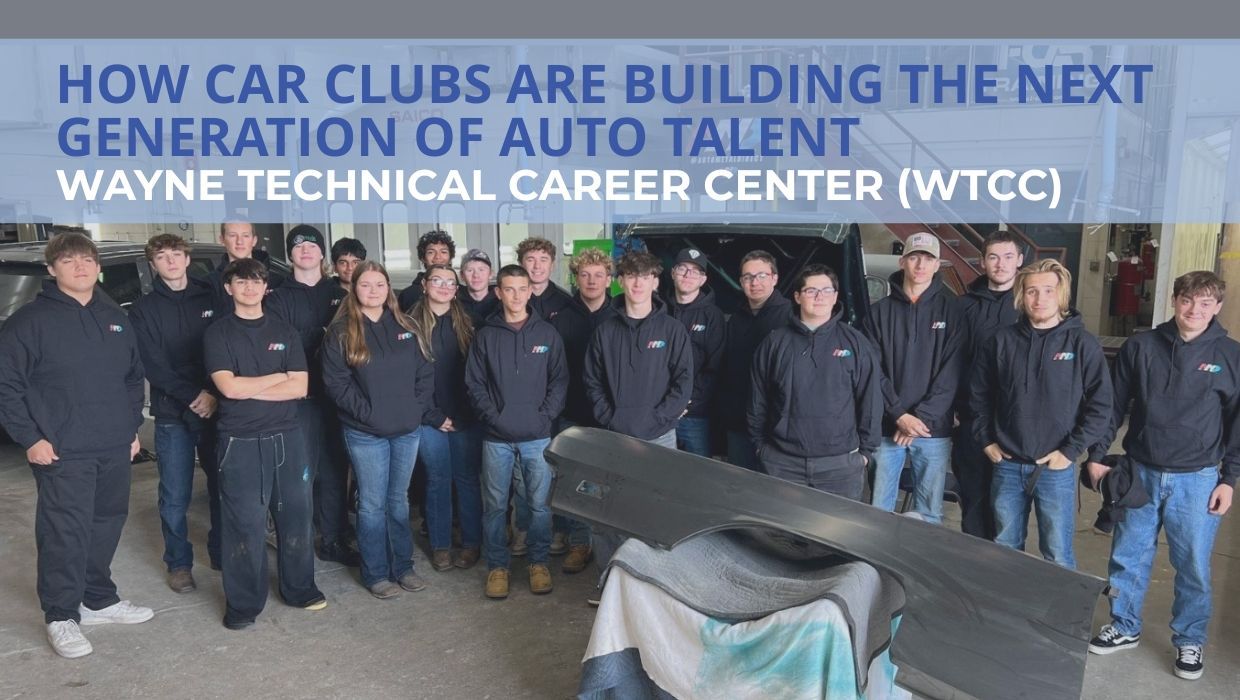
Students in Wayne Technical Career Center auto shop posing in hoodies around car body panel
By Keith Bourgeois April 10, 2026
What started as a car show became a mission to inspire young builders. See how students are gaining real skills while helping preserve automotive culture.
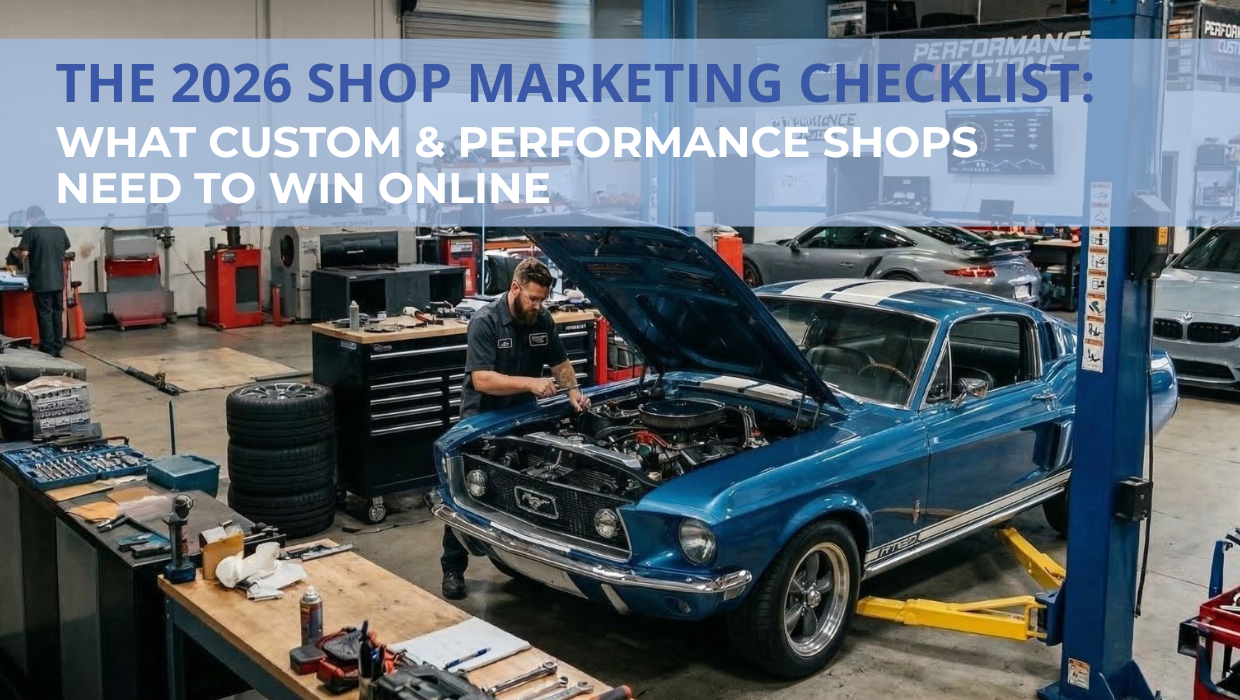
Automotive technician working on a classic blue Ford Mustang inside a professional performance shop
By Shanna Cathey March 13, 2026
A practical 2026 marketing checklist for custom car, restoration, and performance shops. Learn the essential digital marketing strategies every automotive shop needs to increase visibility, generate leads, and win more builds online.
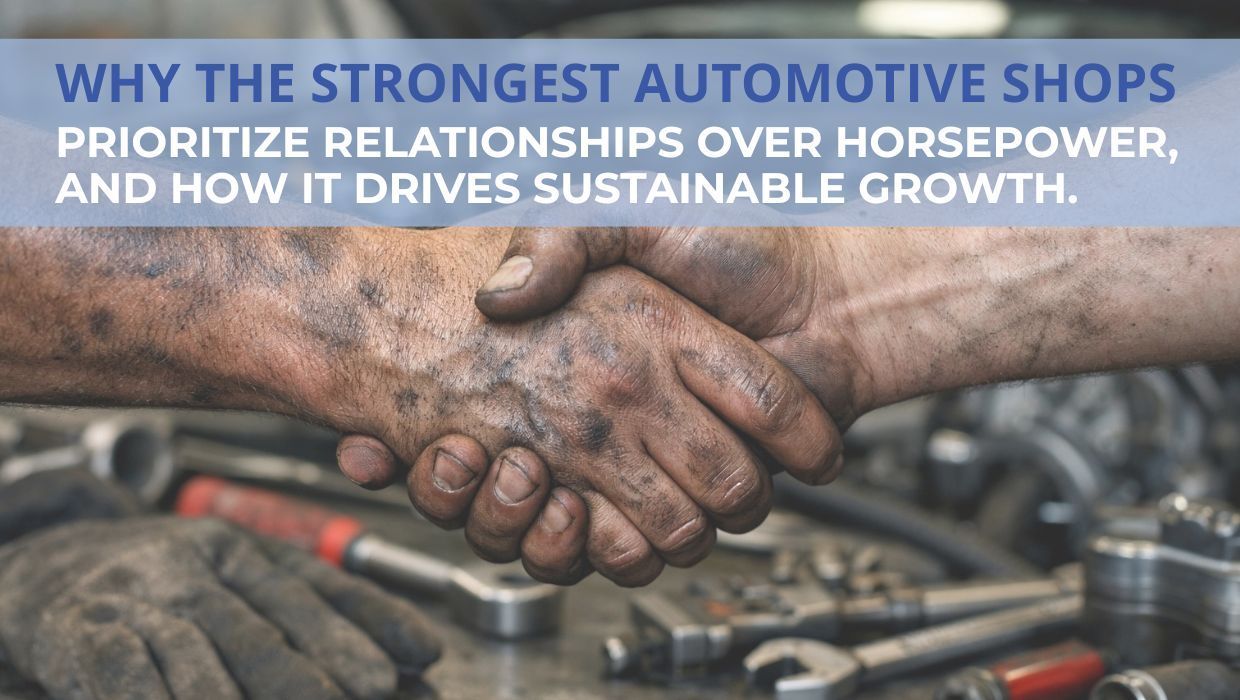
Two dirty hands shaking, text: Automotive shops prioritize relationships for growth.
By Grace Caple February 16, 2026
Trust isn't a buzzword in the automotive aftermarket, it's currency. Discover how successful shops build loyalty, earn trust, and create lasting customer relationships that fuel long-term growth.
Image of Porsche in a performance shop in the winter
By Shanna Cathey & Barry Alt January 21, 2026
Your shop may be slow in the winter, but it's the perfect time to fix your Auto Restoration, Performance, and Custom Build shop marketing. Learn why winter is ideal for systems, strategy, and growth.
AI’s Place in Automotive Aftermarket Shops - PART 2
By Barry Alt December 13, 2025
How artificial intelligence can power your company’s engine behind the scenes.
Show More